
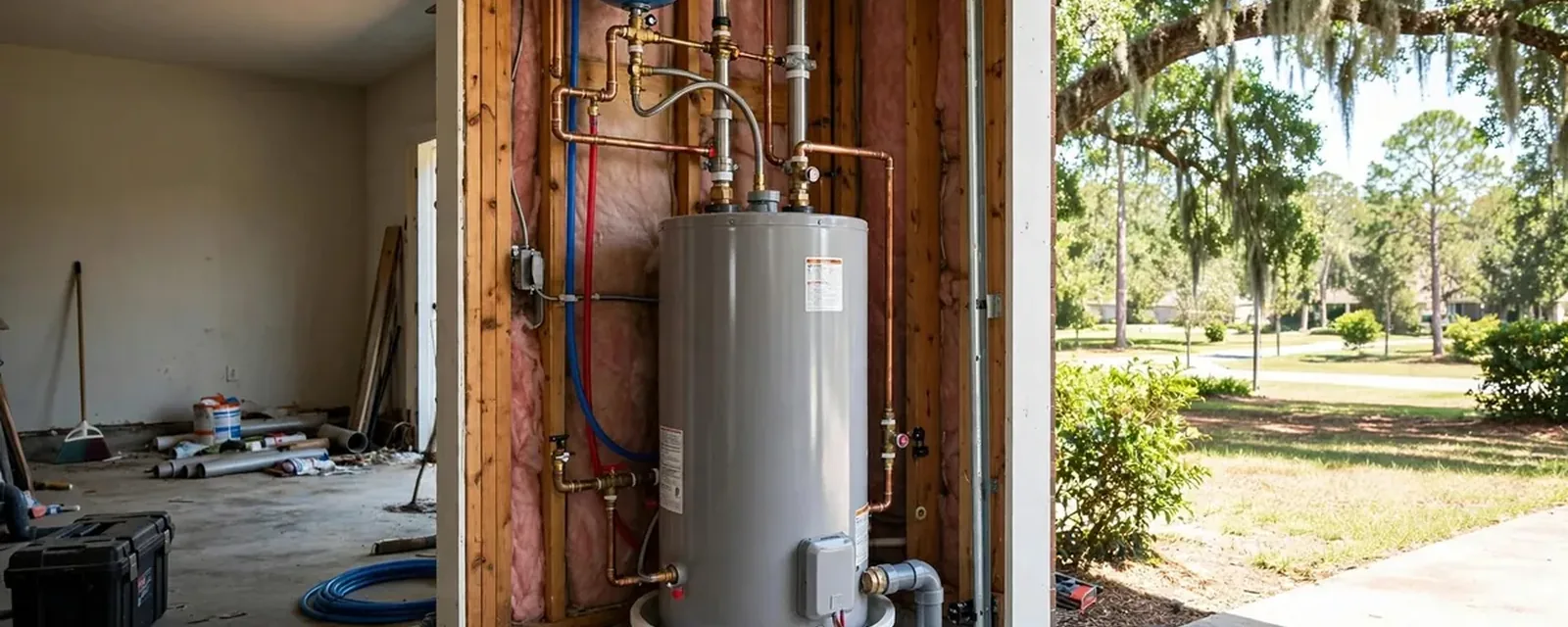
Water heater replacement is the job of removing a failed or worn out unit and installing a new one, with the supply lines, venting, relief valve piping and permit that Massachusetts requires. When a tank gives out, it can release its full volume onto the floor, so the first hour matters more than the shopping. Our dispatch line is open 24/7, and the steps below keep the damage small until the plumber arrives.
Questions people ask before replacing a water heater
Yes. The 24/7 emergency line takes calls for failed tanks at any hour, and same-day appointments are offered when available for planned swaps. The plumber we dispatch will stop the flood first, then give you a clear price before work starts on the new unit.
Size follows household use at the busiest hour. Plumbers compare the unit's first hour rating, which is how much hot water it can deliver in 60 minutes starting full, against how many people shower, run the dishwasher and do laundry back to back. A bigger family does not always mean a bigger tank if the unit recovers quickly.
Yes. The local plumbing inspector must issue a permit before a heater is replaced, and permits go only to licensed plumbers. You can ask to see it. Ask the Milton plumbing inspector about local inspection steps, since we do not state fees or timing for the town.
Confirm this before the job starts. Some plumbers remove the old tank and some leave it for you to arrange. Ask whether removal is part of the quoted price, who carries it out, and where it goes. A drained tank still weighs enough to need two people on stairs.
Often yes, but it is a project, not a swap. The plumber looks at space, since a heat pump unit needs open air around it, a condensate drain, and an electrical circuit sized for it. Gas piping and the flue are capped or removed by someone licensed for gas work. Ask who handles each piece and who pulls each permit.
A like for like swap in an accessible spot is usually a single visit, while a fuel change, a new vent path or a move to another room takes longer. The plumber explains the scope when you call. Draining the old tank and refilling the new one take real time that cannot be rushed.
Call us with the address and a contact who can open the unit. Tenants without hot water and flooding below need a fast response, so landlords and property managers can approve the work by phone. Keep the permit copy and the new unit's data label for your records.
If the tank itself leaks, no. If the problem is a small part and the tank is sound, a repair can make sense. The table on this page lays out how age, leaks and repeat failures point one way or the other.
Rather talk it through? Call and ask a plumber.
(617) 752-0573What to do when your water heater tank fails and floods
A tank that has split can drop dozens of gallons in minutes, and the water may reach a furnace, panel or finished room. Call at any hour, including nights and weekends, and a same-day visit is available when the schedule allows. Do these things in this order.
- Cut the power at the breaker for an electric unit. For gas, turn the gas control knob to off.
- Close the cold water valve above the tank, or the main shutoff if that valve is stuck.
- Do not step into standing water near outlets or the panel. Switch the power off at the panel only if it is dry and safe to reach.
- Open a hot faucet on an upper floor so the tank stops refilling and pressure drops.
- Move belongings to higher ground, take photos for your insurer, and call.
How a replacement day runs
Whether the job is an emergency or booked, the work follows the same order.
Shut down and drain
Power or gas goes off, the water is closed, and the old tank is drained to a floor drain or outdoors.Disconnect and remove
Supply lines, gas or electric connections and the vent are separated, then the unit is carried out.Set the new unit
The new heater sits level in a drain pan with a pipe run to a safe drain point.Reconnect and vent
New flex connectors, a relief valve with discharge piping, and a vent or combustion air path go in.Fill, purge and test
The tank fills with a hot tap open to clear air, then fuel, flame or elements are tested before the permit work is signed off.
Sizing a new heater for your household
Tank capacity gets the attention, but the first hour rating is the number that matches real life. It combines the stored volume with how fast the burner or element heats the next batch. A 40 gallon gas unit can outperform a 50 gallon electric unit because gas heats faster.
Count your peak morning: showers, a laundry load, a dishwasher cycle. Tell the plumber how many bathrooms you have and whether anyone fills a soaking tub. Oversizing wastes energy keeping extra water hot, and undersizing leaves the last person with a cold rinse.
Water Heater Replacement emergency? Call the 24/7 line
Licensed plumbers are dispatched day and night, and you hear the price before work starts.
Fuel types side by side
The fuel you choose follows what the house already has and what you are willing to change.
| Fuel type | What it needs | Watch for |
|---|---|---|
| Gas tank | Gas line, vent, combustion air | Vent sizing and draft, leak testing |
| Electric tank | A dedicated circuit and breaker | Slow recovery on large households |
| Hybrid heat pump | Open air, condensate drain, circuit | Cool air output and fan noise in small rooms |
| Tankless gas or electric | Large gas line or heavy electrical service | See the tankless page for limits |
Venting, combustion air and the safety pieces
A gas heater needs a vent that carries exhaust outside and enough combustion air to burn cleanly. Rerouting a flue from a chimney to a side wall is a vent redesign, not a trim job. Any change to the gas line, the flue or the burner involves gas fitting licences, so ask who holds which licence.
Three other parts matter on every install. A drain pan with a pipe catches slow leaks. A relief valve with a full size discharge pipe protects against overpressure and should end in a visible, safe spot. An expansion tank gives heated water somewhere to go when the supply is a closed system, which is common where a backflow device or pressure reducing valve is installed.
Upgrade options worth knowing about
Replacement is the moment to think about efficiency. Heat pump water heaters move heat from the surrounding air into the tank instead of generating it, so they use much less electricity than a standard electric tank. They suit basements and utility rooms with open space and a nearby drain.
A tankless unit is another option, but it changes gas line size, venting and the way hot water behaves at the tap. Planned work is covered on the installation page. Milton's older housing means pipe condition and shutoff valves deserve a look at the same visit: median home age is 71 years, so the plumbing around the heater may be older than the heater.
Replace now or repair first
| What you see | Points to | Why |
|---|---|---|
| Water from the tank body or bottom | Replace | Corroded steel cannot be patched |
| Rust in hot water only | Replace, soon | The inside of the tank is breaking down |
| Heater has had two or more repairs in a short span | Replace | Parts are failing in sequence |
| Pilot or element trouble on a sound tank | Repair | A small part, not the tank |
| Relief valve dripping, tank dry | Test, then decide | Pressure may be the cause, not the heater |
For the repair side of this decision, see water heater repair.
What shapes the price of a new water heater
You get a clear price before work starts. These factors move it.
Unit type and size
A larger tank or a heat pump unit costs more than a basic tank of the same fuel.
Venting and piping changes
A new flue path, longer gas line or relocated unit adds labor and materials.
Code items
Expansion tank, pan, relief piping and shutoff valves are added if the existing setup lacks them.
Permit and removal
Confirm whether the permit work and haul away of the old unit are in the quoted price.
Access and timing
Tight stairs, an attic location or an after hours call change the scope.
Standard homeowners policies often cover sudden and accidental water damage but usually not wear or gradual leaks. Policy wording decides, so read it or ask your insurer.
Replacing a heater near the Neponset
The town's resilience report describes flooding along the Neponset River and sewer backups during storm surge in East Milton. A new heater in a low basement should sit on a stand with the pan and drain line in place, and the electrical controls should be well above the floor. That way a flood does not ruin a brand new unit in its first season. The same advice holds across the line in Canton.