
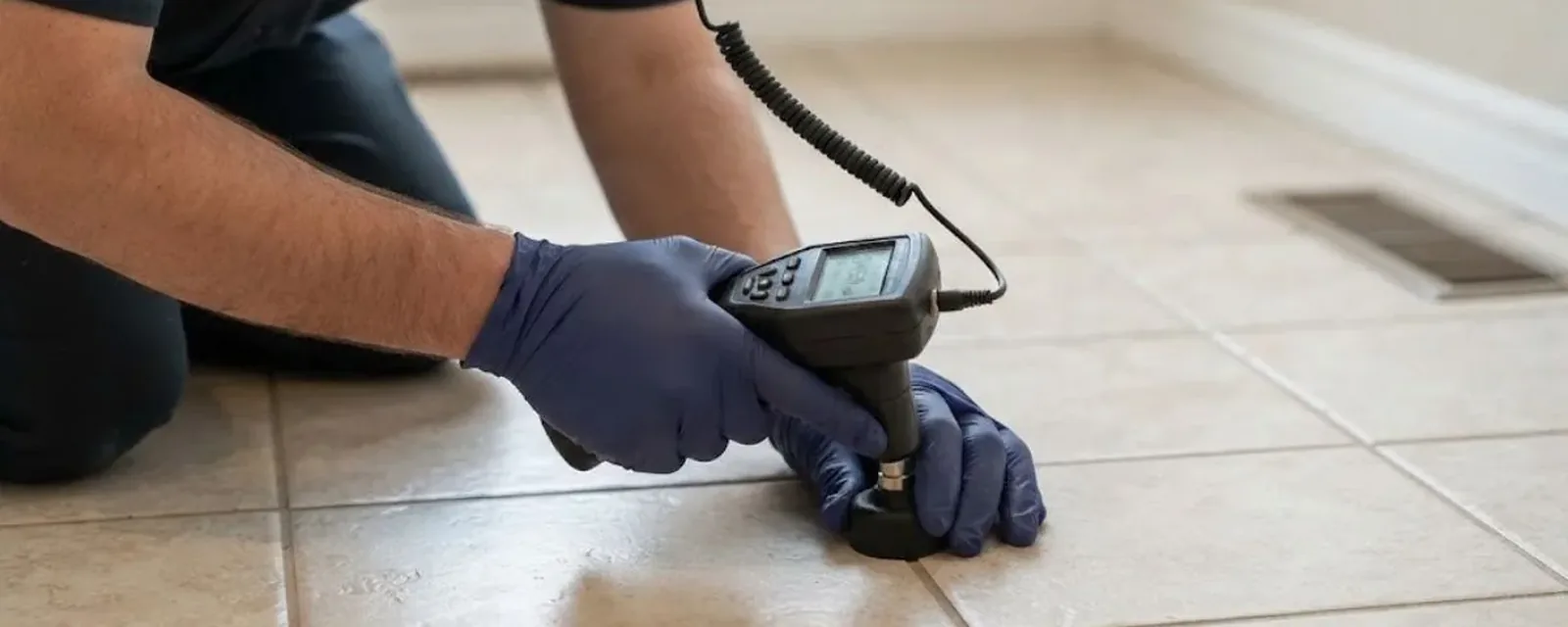
Leak detection means locating a hidden water loss precisely, so the repair opens one small area instead of half a room. Milton Pro Plumbing runs 24/7 emergency dispatch with licensed plumbers, and water that is pouring, soaking a ceiling or nearing the electrical panel is handled at any hour. While you wait, close the main water valve, keep clear of wet outlets, and move belongings out from under the drip.
Slow leaks matter just as much. They raise the water bill, rot framing and feed mold long before a stain shows, and the meter at your house is the quickest honest way to tell whether one exists.
Questions people ask before calling about a hidden leak
Yes. The dispatch line runs 24/7, and a leak that is actively flowing, bulging a ceiling or reaching electrical equipment gets treated as an emergency at midnight the same as at noon. Slow leaks with no visible water can usually wait for a same-day appointment when one is available. Tell the dispatcher what the meter is doing and where you see water.
Run the meter test above: shut off every fixture, note the meter, wait fifteen minutes and look again. Other clues are a bill well above normal, running water sounds in a quiet house, a warm floor spot and paint that bubbles. Two clues together almost always mean water is escaping.
Usually not. Listening gear, thermal imaging and pressure tests narrow the search to a spot a few inches across, so the plumber opens a small access hole. The drywall patch and paint are finish work a plumber does not always do. Ask for the plan and the clear price before work starts.
It depends on which side of the curb stop valve the leak sits. The Town maintains the line from the main to the curb stop, and the owner maintains the rest. Call Milton Water and Sewer at 617-696-5731 first for the street side. For the owner side, a plumber can test the line and quote the repair.
A leak that comes and goes can hide from a single test. Toilet flappers, sprinkler zones on a timer, a weeping water heater relief valve and a dripping outdoor spigot show up only at certain times. Repeat the meter test overnight. If the numbers still make no sense, ask Milton Water and Sewer how your meter was read.
Coverage varies. Many standard policies respond to sudden, accidental water damage yet leave out wear, slow leaks and upkeep, and the exact wording rules. Some treat the search itself differently from the damage it caused. Ask your insurer before work begins and keep photos of the damage and the meter.
Tell your landlord or property manager right away, in writing if you can, and photograph the stain. The owner usually arranges and pays for plumbing repairs in a rental. If the owner asks us to look, the property manager can call and approve the visit, and we will explain the findings to whoever is paying.
Rather talk it through? Call and ask a plumber.
(617) 752-0573The meter keeps spinning with every faucet off, or the water bill jumped. Is it a leak?
Most likely, yes. A meter that moves when nothing is running, a bill far above your usual, a warm patch on the floor or a brown stain spreading across a ceiling all point to water escaping where you cannot see it. Leak detection is the work of finding that spot with sound, pressure, heat and cameras so the repair stays small.
When a hidden leak is an emergency
Treat the situation as an emergency when water is flowing steadily, a ceiling is sagging, or water is dripping near outlets, light fixtures or the panel. The 24/7 line takes these calls on nights, weekends and holidays, and the plumber we dispatch starts with stopping the water.
- Close the main shutoff valve, usually near the meter where the line enters the basement, by turning the handle or wheel clockwise until it stops.
- Open one faucet on the lowest floor and one upstairs so the pipes drain and pressure drops.
- If water is near the panel, outlets or a light fixture, stay out of that room and call the electric utility. Only cut power at the breaker if the panel and the floor in front of it are completely dry.
- Set buckets under drips and move furniture, rugs and electronics away from the wet area.
- Photograph the damage and the water meter before cleanup, since insurers ask for both.
A fifteen-minute meter test you can do yourself
You need a flashlight, a pen and a phone camera. Most houses have the meter in the basement or a utility closet close to the main shutoff valve.
Stop every use of water
Turn off all faucets, the dishwasher, the washing machine and the ice maker, and make sure no toilet is running.Find the leak indicator
Most meters have a small triangle, star or dial that spins with even a tiny flow. Wipe the glass, note the digits and photograph them.Wait fifteen minutes
Use no water at all. If you can, leave the house alone for the whole time.Read it again
If any digit has moved or the indicator is turning, water is escaping somewhere.Close the main valve and check once more
If the meter now sits still, the leak is in the house piping past the valve. If it keeps moving, the loss is on the pipe before the valve, which points toward the service line.
Leak Detection emergency? Call the 24/7 line
Licensed plumbers are dispatched day and night, and you hear the price before work starts.
What the meter reading tells you about a high bill
Compare the pattern you saw with the list below. A toilet is the most common false alarm: drop food coloring in the tank, wait fifteen minutes without flushing, and color in the bowl means the flapper leaks.
- Meter still: no leak at that moment, so a high bill points to real use or a leak that runs only at times, like a toilet or sprinkler zone.
- Only the smallest dial creeping: a slow leak, often a flapper, a dripping faucet or a pinhole.
- Dial spinning steadily: a larger loss, such as a split pipe, a failed heater connection or a damaged service line.
- Meter stops when the main is closed: the leak is inside the house.
- Meter runs with the main closed: the loss is before the valve.
How hidden leaks are found: methods compared
No single method finds every leak. A good search often combines two or three. Ask any plumber which of these tools they bring to the job.
| Method | Best for | How it works | Limits |
|---|---|---|---|
| Acoustic listening | Pressurized supply lines and service lines | Contact microphones and ground sensors pick up the hiss of water escaping under pressure | Traffic noise interferes, and plastic pipe carries sound poorly |
| Pressure testing | Proving that a section of pipe leaks at all | A section is isolated, filled with air or water and watched on a gauge | Says a leak exists but not where it is |
| Thermal imaging | Hot water lines, radiant heat pipes, wet insulation | An infrared camera shows temperature differences on wall and floor surfaces | Cold-water leaks may not show, and results need interpreting |
| Tracer gas | Small leaks in buried or hard-to-reach lines | A harmless gas blend is pushed into the line and a sensor sniffs the surface above | Needs line access and takes longer to set up |
| Camera inspection | Drain and sewer lines, and inside walls through small openings | A small camera on a cable travels the pipe or looks through an access hole | Shows drain lines and open cavities, not pressurized supply pipe |
| Moisture mapping | Finding how far wet drywall or subfloor extends | A meter reads moisture at a grid of points across the surface | Shows where it is wet, not necessarily where the water starts |
Water travels along joists, pipes and framing, so the wet spot is often some distance from the source.
Water service line leaks: the Town side and the owner side
The service line carries water from the main in the street to your house. The Town of Milton maintains the stretch from the main to the curb stop valve. From the curb stop to the house, the pipe is yours. That split decides who repairs and who pays, so find out which side is leaking before anyone brings a shovel.
If water is surfacing in the street, at the curb or in a soft patch between the street and your lawn, call Milton Water and Sewer at 617-696-5731 first for the street side. If your meter test shows a loss, a plumber can test the owner side. Any digging needs a Dig Safe ticket: call 811 at least 72 business hours ahead, since weekends and holidays do not count.
The Town filed a lead service line replacement plan with MassDEP in October 2024, so if an owner-side line is opened for repair, ask the plumber to note what the pipe is made of.
Ceiling and wall leaks: finding where the water really starts
A stain on a ceiling is rarely under its source. Water follows joists and pipes sideways before it drips, so the culprit may sit several feet away. Common sources are an upstairs tub overflow gasket, a worn shower pan, a supply fitting inside a wall or a drain joint under a bathroom floor.
One quick sorting test helps. If the stain grows only during or after rain, suspect the roof or a window, and a roofer is the right call. If it grows when someone showers or runs the dishwasher, the plumbing is the cause. The plumber uses thermal imaging and moisture mapping, then opens a small access hole at the likely spot and confirms with a pressure test.
Basement, crawlspace and under-house leaks
Nearly half of Milton homes (46.8%) date to 1939 or earlier, and many of them have basements with a mix of old and newer pipe in the same ceiling. That mix means joints between different metals, which is where drips often start. If you have a basement, look along the ceiling joists for beads of water, green crust on copper, orange bloom on iron or galvanized steel, and darkened wood beneath a fitting.
Summer condensation fools many people. Cold pipes sweat in humid air and drip, but the drops form along the whole pipe and stop when the air dries. A leak drips from one point and keeps going.
When the basement floor itself is wet and no pipe is dripping, the water may be coming through the foundation rather than a pipe. That points to a drainage problem, which the basement waterproofing page walks through.
Slab leaks: what applies to a Milton house and what does not
Slab-on-grade construction exists in Milton, usually in additions, garages and single-story sections, but older Milton homes sit mostly on basements. That makes the classic slab leak, a supply pipe buried under a concrete floor, less common here than in warmer regions. More often the buried pipe under a basement floor is a drain line, and the method changes from listening for pressurized water to running a camera.
On a true slab, signs include a warm floor spot from a hot line, running-water sounds, a moving meter and a climbing hot water bill. The plumber pins the spot with acoustic listening and thermal imaging, then proves it with a pressure test.
The fix is a choice. The slab can be opened at the leak for a spot repair, or the line can be abandoned and rerouted through walls or the ceiling, which is where repiping enters the conversation. A pipe that has leaked once through old age often leaks again, so ask the plumber how the rest of the line looks.
Buried line leaks in the yard
Underground leaks announce themselves outdoors: a patch of grass that stays green and soggy in dry weather, soil that has sunk, a wet spot that never dries or a sudden drop in pressure across the house. The buried pipe may be the water service, a sprinkler feed, an outdoor spigot line or a drain.
Finding it means listening along the ground and, for plastic pipe that carries sound poorly, using tracer gas. Before digging, call 811 for Dig Safe, even as a homeowner with a shovel. The ticket lasts 30 days.
Sprinkler, spigot and meter-box leaks
Irrigation leaks show up as soggy zones, geysers from a broken head or a zone that no longer reaches the lawn edge. Shut the irrigation valve and repeat the meter test. If the meter stops, the sprinkler system is the source.
If your meter or shutoff sits in a box outside, lift the lid and look for standing water or a hissing sound. Fittings in that box may belong to the utility, so ask Milton Water and Sewer which parts are theirs before anyone tightens a nut.
Pool and spa leaks
Pools and spas are a minority of Milton homes, so this is short. A bucket test separates evaporation from a leak: set a bucket on a pool step, mark the water level inside and outside, and compare after a day. Shell and liner problems belong to a pool contractor.
Low water pressure: a leak, a clog or the street?
Weak pressure at every fixture can come from a leak ahead of the house, a half-closed valve, a failing regulator or pipes narrowed by rust. One weak faucet usually means a clogged aerator or cartridge.
Ask the neighbors next door whether theirs is low too. If so, call Milton Water and Sewer, since the cause may be in the main. If only your house is affected and the meter test shows movement, a hidden leak is a prime suspect. Old galvanized supply pipe also chokes from inside, a problem addressed on the repiping page.
Signs of a hidden leak and when to call
Any two of these together make a strong case for a leak search.
- The meter moves while every fixture is off.
- The water bill rose without a change in household habits.
- A floor or wall feels warm or damp to the touch.
- Paint bubbles, wallpaper lifts or drywall turns soft.
- You hear a faint hiss or trickle in a quiet house.
- Musty smells linger in a closet, cabinet or basement corner.
What affects the price of leak detection
Expect a clear price before any search begins. Four things move it.
Where the leak is
A line in an open basement ceiling takes less time to search than one behind finished walls or under a driveway.
How many methods are needed
A single pressure test is quicker than a day of listening, thermal imaging and camera work in combination.
Access and surface
Concrete, tile, plaster and landscaping each add work to reach the pipe once it is found.
Repair after the search
Finding the leak and fixing it are separate jobs. A spot repair, a section replacement and a reroute each cost differently.
A word on insurance: sudden, accidental water damage is commonly covered, while long-running leaks and wear commonly are not. The policy decides, so check it or call your insurer.
Leaks in apartment buildings, shops and larger properties
Multi-unit buildings and commercial spaces add questions about shared risers, roof drains and tenant responsibility, and the search often spans several units. Our commercial plumbing page covers how these jobs are scheduled around occupants. Property managers in Milton and in nearby Quincy can call the same 24/7 line for active leaks at any hour.