
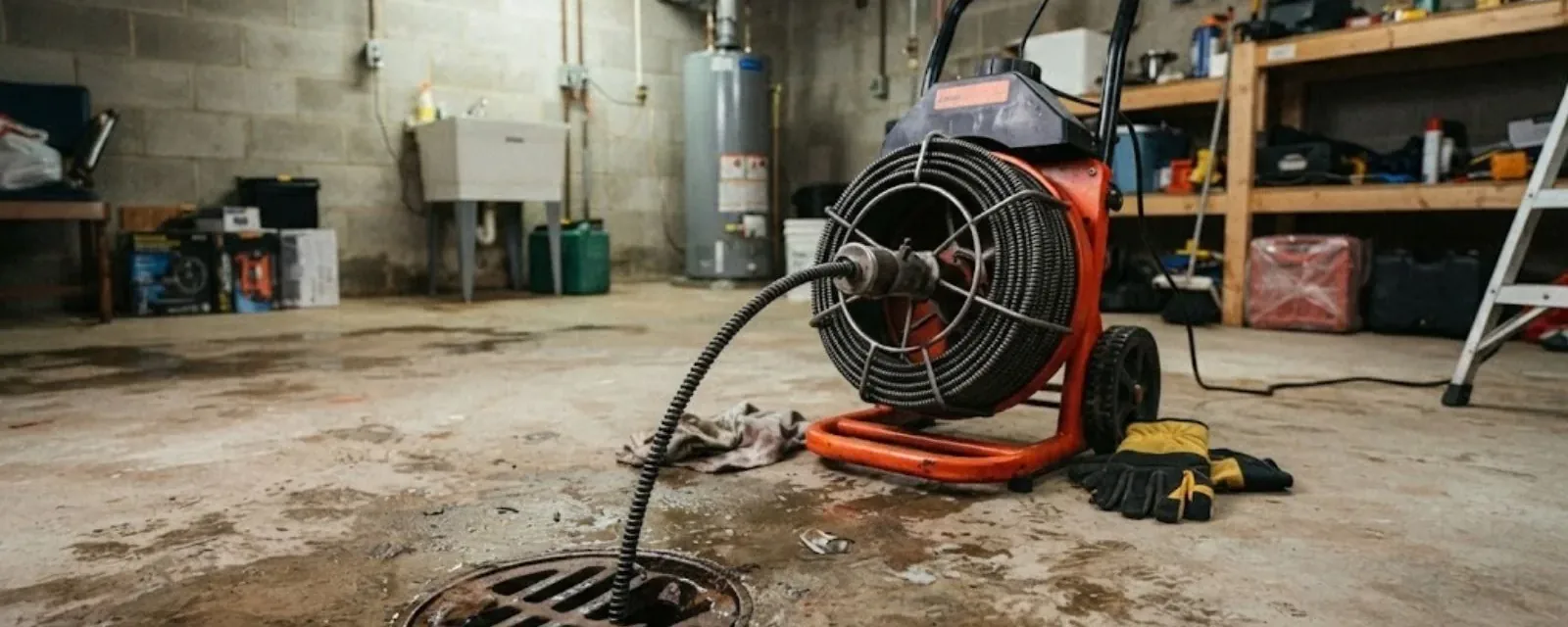
Drain cleaning means removing whatever is narrowing or blocking a drain pipe so wastewater flows freely again. The blockage might be grease, hair, soap film, paper, wipes or tree roots, and the right tool depends on where it sits and what it is made of. Our 24/7 emergency dispatch covers Milton, MA, so a backing-up drain at midnight gets a phone answer. While you wait, stop running water, keep toilets unflushed, and move belongings away from floor drains.
Most calls start with one slow sink. Some start with water rising in a shower when the washing machine drains. This page explains how to tell those apart, which method fits each, and what a plumber should show you before any work begins.
Questions people ask before calling about clogged drains
A plunger or a store-bought chemical often opens a small hole through the blockage and leaves the coating on the pipe wall. Grease and soap film rebuild fast on that rough surface. If the same drain slows within weeks, ask for a camera look or a hydro jetting pass that scours the whole pipe wall.
One slow fixture points to its own branch. If the toilet gurgles when the shower drains, or two or more fixtures slow down together, the shared main line is the likely culprit. A basement floor drain that bubbles is another sign. Main-line work reaches farther and often needs a different machine.
We advise against it. Caustic openers can sit in a fully blocked pipe, burn skin if the line is opened later, and soften old plastic traps. They also leave the plumber working in harsh liquid. If you already poured some in, tell the plumber on arrival so they wear the right protection.
Used correctly, a cable with the proper head for the pipe size does not harm sound pipe. Brittle old cast iron, thin galvanized steel or a cracked clay joint is a different story. That is why a plumber should ask about your pipe material and how old the house is before choosing a cutter.
No. The state fact sheet for homeowners says minor repairs such as clearing a blocked drain do not need a permit. Replacing or moving piping does. If a clog turns out to hide a broken pipe, the repair side is a different matter and the Milton plumbing inspector issues that permit.
Yes. Our 24/7 emergency dispatch takes calls overnight, on weekends and on holidays, and same-day appointments are offered when available for slow drains that are not yet backing up. Call, describe which fixtures are affected, and we tell you what to do with the water while a licensed plumber is sent.
Tell the plumber which unit and which fixtures are affected, and whether other units share the same stack. A single-unit clog and a stack problem are different jobs. Give the tenant the call number so access can be arranged quickly, and keep the service report for your records.
The price depends on which drain, how far in the blockage sits, whether a cleanout exists, and which tool is needed. The plumber gives you a clear price before work starts, so you can say yes or no with the number in front of you.
Rather talk it through? Call and ask a plumber.
(617) 752-0573One slow sink or the whole house? Reading the symptoms
Every fixture in a house drains into a small branch pipe, and those branches join a larger main line that runs to the sewer. A clog in a branch hurts one fixture. A clog in the main hurts everything downstream of it, usually starting with the lowest drain in the house.
The pattern of symptoms tells you which one you have before anyone touches a cable. Check these:
- One sink or tub drains slowly while the rest of the house is normal, so the blockage is in that branch.
- A toilet gurgles or the tub water shifts when you run the washing machine, which means air and water are fighting in a shared line.
- Two or more fixtures slow down at once, especially on the lowest floor, which points to the main line.
- A basement floor drain bubbles, smells, or shows water when someone upstairs flushes.
- Water appears in a tub or shower right after the kitchen sink or dishwasher empties.
Cable or jetting: which tool fits which clog
Neither method is better in every case. A cable is quick and cheap on a soft blockage near the fixture. A water jet is better at cleaning the pipe wall itself. Here is how we weigh them.
| Situation | Usually the better tool | Why |
|---|---|---|
| Hair or a small object in a sink or tub trap arm | Hand cable | It breaks or hooks the blockage in seconds with little mess. |
| Grease buildup in a kitchen branch | Cable first, jetting if it returns | The cable opens flow. Jetting removes the layer that keeps coming back. |
| Tree roots in a main line | Cutting head, then jetting | Roots must be cut. Water then flushes the cuttings out. |
| Whole line is slow and coated with scale | Jetting | High-pressure water scours the wall instead of poking one hole. |
| Old, brittle or collapsed pipe suspected | Camera first, then the gentlest method | Force can crack weak pipe and turn a clog into a repair. |
| Cable stalls and will not pass a point | Camera, then decide | Something solid or a broken section may be in the way. |
For the full comparison of the water method, see our hydro jetting page.
Why the kitchen sink backs up more than any other drain
Kitchen lines carry hot grease that looks liquid in the pan and turns solid a few feet down the pipe. Each wash of dishes adds a thin layer of fat, food starch and soap that narrows the pipe a little more. A 1.5 inch kitchen branch can lose most of its opening before it stops draining.
A double-bowl sink, a dishwasher and a disposal often share one trap and one branch. That is why the other bowl fills with gray water when you run the disposal, and why a dishwasher can push dirty water back into the sink. When the blockage is past the wall, a plunger will not reach it.
A kitchen cleaning usually starts at the trap and cleanout, then runs a small cable toward the main stack. Hot water alone will not dissolve a grease plug that has cooled and hardened. If the line clogs again within a few weeks, ask the plumber to scour it with water rather than just open it again.
Drain Cleaning emergency? Call the 24/7 line
Licensed plumbers are dispatched day and night, and you hear the price before work starts.
What a drain cleaning visit looks like
The sequence below is typical for a branch or main-line clog. Your plumber may change the order when the symptoms point elsewhere.
Ask where and when
The plumber asks which fixtures are slow, when it started, and what has already been poured or flushed.Test the fixtures
Running a few drains shows whether the problem is local or shared, and where water first appears.Find an access point
A trap, a cleanout or a removed toilet gives the cable a way into the line without cutting pipe.Clear the blockage
A cable, cutting head or water jet is chosen for the material in the pipe, not for habit.Prove it works
Water is run through the line to confirm full flow, and a camera look is offered if the clog came back before.
Shower and tub drains
Shower and tub clogs are mostly hair wrapped in soap scum, sitting just below the strainer or in the trap. A drain strainer, a plastic hair catcher, and cleaning it each week prevent most calls. If water pools above your ankles and clears slowly, the blockage is usually within two or three feet of the drain.
When a tub backs up only after the washing machine or a toilet is used, the problem is farther down the line and the tub is just the lowest open point.
What not to pour or flush
Most clogs are made one habit at a time. These items do the most damage:
- Cooking oil, bacon grease and butter, which cool and coat the pipe wall.
- Coffee grounds, rice and pasta, which swell or pack into a dense plug.
- Wipes labeled flushable, which do not break up the way toilet paper does.
- Paper towels, cotton swabs and dental floss, which snag on rough pipe joints.
- Cat litter, which hardens like cement in a low spot.
- Liquid drain openers, which can leave caustic liquid sitting in a blocked pipe.
Older Milton homes and their drain pipes
The Town of Milton Housing Production Plan reports that 46.8 percent of homes were built in 1939 or earlier and another 28.5 percent between 1940 and 1959. That is about three quarters of the housing before 1960, with a median age of 71 years. Drain lines in houses that age are commonly cast iron, clay or galvanized steel, and scale and rust shrink the inside of those pipes over decades.
In practice this means a plumber should ask about your pipe material and the age of the house before choosing a method. A camera look first is sensible when the line is old, when cabling has stalled, or when the same drain keeps clogging. It shows whether the problem is debris or a damaged pipe, so you do not pay to clear a line that needs repair.
When the drain line itself is leaking
A drain line leak can look like a wet ceiling under a bathroom, damp drywall behind a toilet, or a stain on a basement wall that appears only after a shower. Drain water is not under pressure, so the leak shows when the fixture is used, not constantly. A cracked joint, a failed gasket or a corroded cast iron section are the usual causes.
Cleaning will not fix a leak. The plumber has to find the failed section and repair it, which may need a permit from the Milton plumbing inspector. If you see water only while a fixture runs, say so on the call.
When a clogged drain is an emergency
Call right away if sewage or gray water is coming up in a tub, shower or floor drain, if the toilet will not flush and other fixtures are rising, or if water is spreading toward electrical outlets or a furnace. We dispatch at night, on weekends and on holidays. Here is what you can do safely while waiting:
- Stop using every sink, tub, toilet, dishwasher and washing machine in the house.
- Keep children and pets out of any standing water, since backed-up drain water carries bacteria.
- Move rugs, boxes and stored items off the floor, and unplug anything sitting near the water.
- If water is near the electrical panel or an outlet, stay out of the room and call 911 from outside.
- Do not pour chemical openers. They make the plumber's job riskier and rarely clear a full blockage.
- Note which fixtures are affected so the dispatcher can send the right equipment.
What affects the price of drain cleaning
Two clogs that look alike from the sink can be very different jobs. The plumber gives you a clear price before work starts, based on these factors.
Where the blockage sits
A trap-arm clog is a short job. A main-line clog farther out requires more cable, more time and sometimes a different machine.
Access
A working cleanout speeds things up. If the plumber has to pull a toilet to get in, that adds labor.
Pipe size and material
A 4 inch cast iron main needs a different head and approach than a 1.5 inch plastic branch.
Method
Cabling and jetting use different equipment and time, and a camera look adds a step but can prevent a wrong guess.
Time of day
Night and weekend dispatch costs more to staff than a same-day visit scheduled in daytime hours.
Insurance: standard homeowners policies often cover sudden and accidental water damage but usually not wear, gradual leaks or routine maintenance such as clearing a clogged drain. Policy wording decides, so read your policy or ask the insurer.
Related work and nearby service
When a clog sits past the house wall, the job moves to the street connection. Our sewer line cleaning page covers that, and we also serve neighbors in Canton with the same dispatch.