
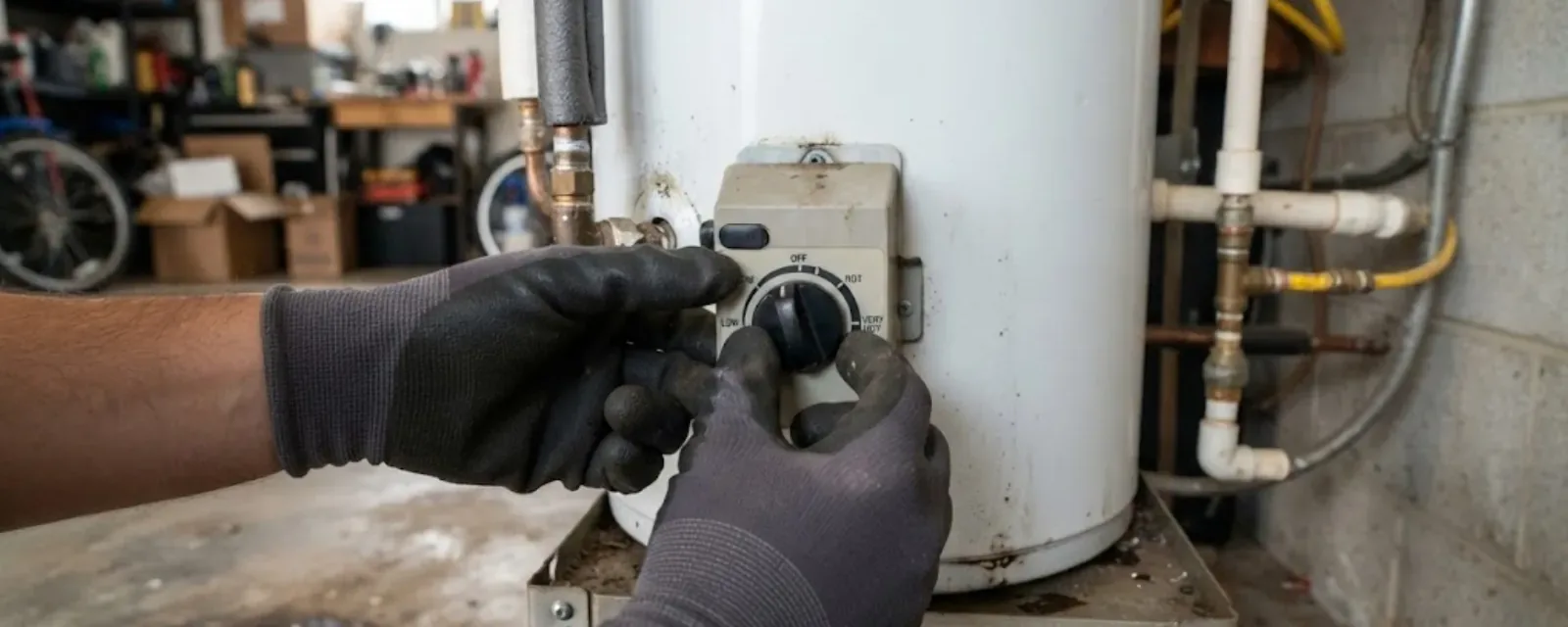
Water heater repair means finding out why a tank, burner, element or valve has stopped doing its job, then fixing that part or telling you plainly that the unit is finished. Milton Pro Plumbing runs a 24/7 emergency line, so a heater dripping at 2 a.m. does not wait for morning. While you wait, shut off the cold water feeding the tank, turn off its power or gas control, and keep towels and a bucket in place.
Most calls come down to two problems: water where it should not be, or no hot water where it should be. The sections below sort out which is which, what you can safely check yourself, and when a repair stops making sense.
Questions people ask before calling about a water heater
Yes. Our dispatch line runs 24/7, and a leaking or flooding tank is treated as an emergency at any hour. Same-day appointments are offered when available for problems that can wait a few hours, like a pilot that will not stay lit. The plumber gives you a clear price before work starts, and you can decline it.
Dry every pipe and valve with a rag, then watch for a few minutes. Drips that start at a threaded connection, the shutoff valve or the relief valve discharge pipe usually mean a repairable part. Water that seeps from the jacket, the bottom seam or the drain valve area usually means the steel tank has rusted through, and that calls for a new unit.
A steady leak is. Even a slow drip can pool in a basement for hours, and a failing tank can empty its 40 to 50 gallons across the floor in minutes. Shut off the cold supply and the power or gas, then call. A damp spot that only appears after long showers can wait for a same-day visit.
The temperature and pressure relief valve opens when pressure or heat climbs past its limit. Constant dripping can mean high household water pressure, a missing expansion tank on a closed system, or a worn valve seat. Do not cap the valve or plug the pipe. Have a plumber test the pressure and decide which cause you have.
A plumber can handle the plumbing side of a hybrid unit, including leaks, valves, drain lines, the condensate path and the electrical shutoff. Sealed refrigerant work and control board faults may belong to the maker's service network. Ask on the phone what the plumber can and cannot service so you do not pay for a visit that cannot finish the job.
Many tank units run roughly 10 to 15 years, depending on water quality, maintenance and how hard they work. Once a tank leaks, repair is not possible. Before that point, a repair is worth it if the part is small and the tank is sound. Compare the repair price against the table on this page.
Tell your landlord or property manager first, since the lease usually decides who arranges repairs. If you are the property manager, call us with the unit's address and a contact who can give access. A leaking tank in a unit above another apartment should be treated as urgent for everyone below.
Replacing a heater needs a permit pulled by a licensed plumber. Small repairs such as swapping a thermostat or element generally do not. The rules sit in the Massachusetts Uniform State Plumbing Code, 248 CMR 10.00, and the Milton plumbing inspector can answer local questions. Ask the plumber which category your job falls in.
Rather talk it through? Call and ask a plumber.
(617) 752-0573When a leaking water heater is an emergency
A tank that is pouring water, hissing hard or sitting in a growing puddle needs action before it needs a diagnosis. Our line is open 24/7, nights and weekends included, and same-day visits are available when the schedule allows. These steps limit the damage while the plumber is on the way.
- Turn off the power: switch the breaker for an electric heater, or set a gas heater's control to off.
- Close the cold water shutoff valve on the pipe entering the top of the tank. A quarter turn lever or a wheel handle both work.
- Open a hot tap upstairs to let pressure drop and stop the flow from the tank.
- Move boxes, rugs and stored items out of the water's path, and use a wet vacuum if you own one.
- Photograph the unit, the label and the water for your insurer, then call.
Fitting, relief valve or tank: reading the leak
Leaks fall into two groups. A leaking fitting, shutoff valve, drain valve or relief valve is a part problem, and a plumber can usually replace that part. A leaking tank is a steel vessel that has corroded through, and no patch will hold.
Water often travels before it shows itself. Look along the top of the tank first, since drips from the hot and cold connections run down the jacket and look like a bottom leak. Then check the drain valve, the pan under the unit, and the floor drain. If the floor is wet but the unit is dry, the leak may be a nearby supply line, and leak detection can trace it without opening walls.
- Top connections dripping: usually a loose or corroded union or a failed flex connector.
- Pipe from the relief valve dripping: pressure or temperature is too high, or the valve seat is worn.
- Water around the base with a dry top: the tank lining and steel have likely failed.
- Rust colored streaks on the jacket: a seam is weeping and the tank is near the end.
No hot water: what to do first and when to call
A cold shower has a short list of common causes, and several are safe to check without tools. Work through the list that matches your fuel type, and stop the moment anything smells, sparks or feels wrong.
- Electric: check the breaker and the reset button on the upper thermostat. Press it once, and if it trips again, stop and call.
- Electric: a unit that gives warm water but runs out fast often has a burned out lower element.
- Gas: look at the pilot or the display. If it is out, follow the relighting steps printed on the tank label only if you smell no gas.
- Gas: a sooty or yellow burner flame, or a tank that rumbles, points to scale or a dirty burner.
- Both: confirm the cold supply valve is fully open and the thermostat is set where you left it.
- Both: check whether hot water is missing at every tap or just one, since one cold tap points to a mixing valve or cartridge instead.
Water Heater Repair emergency? Call the 24/7 line
Licensed plumbers are dispatched day and night, and you hear the price before work starts.
Electric, gas and hybrid heat pump units
Electric tank heaters use two heating elements and two thermostats. The usual failures are a dead element, a stuck thermostat or a tripped high limit switch. These parts are inexpensive compared with a tank, which is why a diagnosis is worth doing on a unit that is not leaking.
Gas units add a burner, a thermocouple or igniter, a gas control valve and a vent. A pilot that keeps going out, a flame that lifts off the burner, or any sign of back drafting at the vent hood needs a plumber with gas fitting authority. Licensing matters here, so ask who is licensed for the gas work and who will pull any permit.
Hybrid heat pump units pair a small compressor and fan with backup elements. They need airflow around the top, a path for condensate, and a drain that does not clog. Many service calls turn out to be a blocked condensate line or a filter that needs cleaning.
Repair or replace: a decision guide
The cleanest rule is that a leaking tank is replaced and a failing part is repaired. The table adds age and damage to the picture. Planning a swap instead of a rescue is covered on the replacement page.
| Situation | Usually repair | Usually replace |
|---|---|---|
| Tank leaks from the body or seam | Not repairable | Yes, shut off water first |
| Pilot, igniter or thermocouple fault | Yes, small parts | Only if the tank is also old |
| Dead element or thermostat (electric) | Yes, quick fix | Only if the tank shows rust |
| Relief valve dripping | Often, after a pressure test | If the tank is also leaking |
| Rumbling and slow recovery | Flush may help | If repeated flushes fail |
| Unit past its expected life with repeat calls | Short term only | Yes, planned swap |
Age alone does not condemn a heater. Condition and repair history matter more.
Sediment and the anode rod
Minerals settle at the bottom of any tank over time. That layer insulates the water from the burner or lower element, so the heater works harder, makes popping or rumbling noises and recovers slowly. A periodic drain and flush is the standard way to clear it.
Inside most steel tanks hangs an anode rod, a metal rod that corrodes first so the tank wall does not. Checking it every few years and swapping it when it is mostly eaten away is general maintenance practice that can extend tank life. A stuck rod or a leaking tank is past that point.
The temperature and pressure relief valve
The relief valve is the safety device that stops a tank from becoming a pressure vessel. It opens when pressure or temperature rises past a set point and sends water down a discharge pipe toward the floor. That pipe should end in a safe, visible spot, never be capped, and never be threaded at the end.
Lift the valve's test lever once a year. A little water should flow, and the valve should snap shut. If it will not reseat, drips constantly, or the discharge pipe is hot to the touch, call a plumber the same day. A hot discharge pipe can mean the thermostat is failing and the water is overheating.
What affects the price of a water heater repair
The plumber tells you the price before work starts, based on what the diagnosis finds. These are the main drivers.
The failed part
A thermostat, element or valve is a different job than a gas control valve or a vent repair.
Fuel and access
Gas work adds testing steps. A heater in a tight attic or crawl space takes longer to reach.
Time of the call
A midnight emergency call involves different scheduling than a booked daytime visit.
Age and condition
A tank with rust or sediment may need more than one fix, which changes whether repair makes sense.
Water damage cleanup
Stopping the leak is plumbing work. Drying out the area is a separate job.
Standard homeowners policies often cover sudden and accidental water damage but usually not wear, gradual leaks or maintenance. Policy wording decides, so read the policy or ask your insurer.
Older Milton homes and basement heaters
Town data puts the median age of Milton homes at 71 years, with 46.8% built in 1939 or earlier. In houses that old, the heater often sits in a basement with a floor drain, old shutoff valves and galvanized or mixed metal pipes. That means a water heater job may expose a stuck valve or a worn pipe, so it helps to ask the plumber to check the shutoffs before they are needed.
Neponset River flooding and sewer backups are on the town's own list of concerns. If your heater sits low in a basement, raising it on a stand and keeping a pan with a drain line under it limits the damage from a failed tank. For nearby towns, the same service is available in Quincy.