
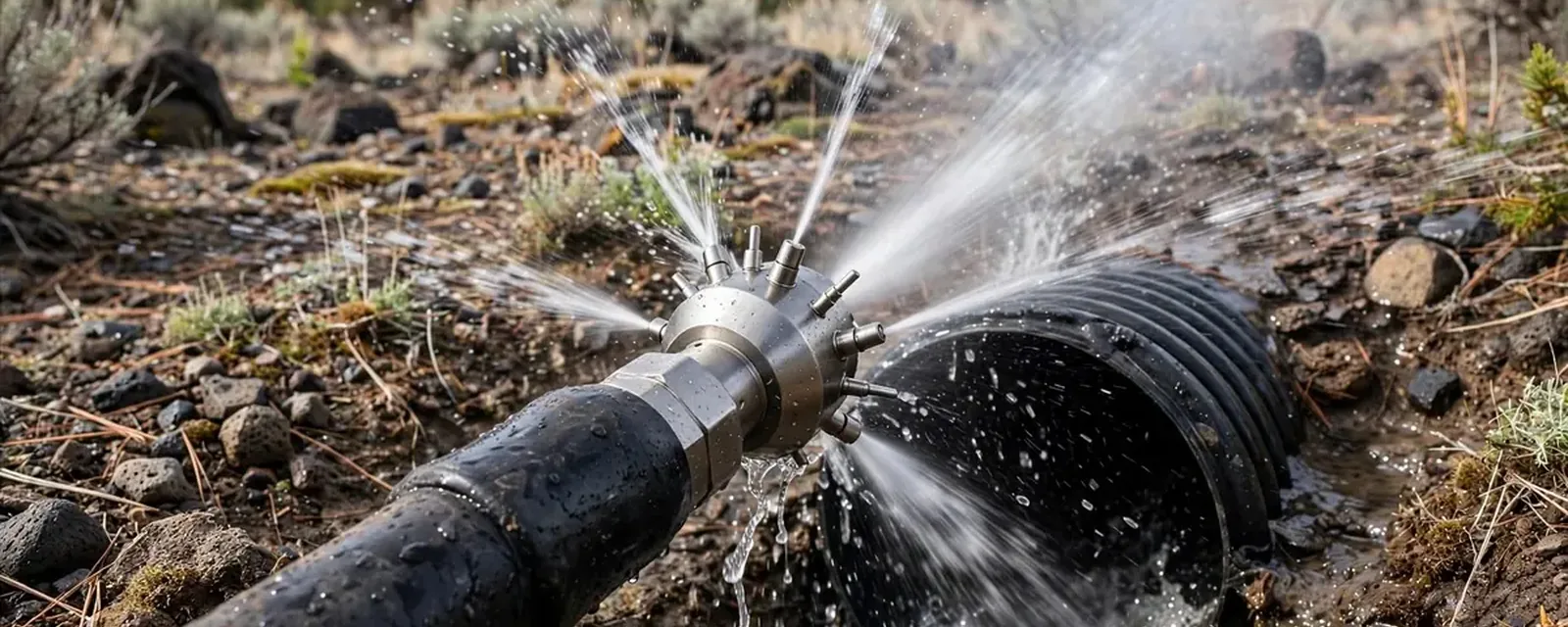
Hydro jetting is a drain cleaning method that sends high-pressure water through a hose and a special nozzle to scrape and flush the inside of a pipe. It removes grease, scale, silt and root cuttings that a cable leaves behind. We offer it as a 24/7 emergency service in Milton, MA when a main line is backing up. While you wait for the plumber, stop using water and keep drains closed.
Questions people ask before calling about hydro jetting
On sound pipe it is safe, because the nozzle pressure is set for the pipe material and size. On brittle cast iron, thin galvanized steel, offset clay joints or a collapsed section, it can do harm. A plumber should look with a camera first when the house is old or the line has a history of trouble.
A snake or cable pushes through the blockage and pulls or cuts it. Jetting uses a rotating stream of water that cleans the whole circumference of the pipe as the hose is fed in and pulled back. The result is a clean wall, not just an open channel.
It can clear fine roots and flush cuttings away. Thick roots that fill the pipe are usually cut first with a rotating blade, then jetted. Roots grow back toward a joint where water escapes, so a recurring root problem often points to a cracked pipe that needs repair.
No. Water cannot rebuild a pipe. If the camera shows a collapse, a belly full of standing water or a separated joint, jetting would not last. The plumber should say so plainly and explain the repair options before you spend money on cleaning.
A typical residential main takes a couple of hours including setup, a camera look when needed, and the final flow test. Long runs, heavy buildup or hard access add time. The plumber gives you a clear price before work starts, so the time and cost are known before the hose goes in.
Yes. Our 24/7 emergency dispatch takes backup calls at night, on weekends and on holidays. We ask which fixtures are affected, tell you how to limit the water, and send a licensed plumber. Planned jetting for a line that is only slow can be booked as a same-day appointment when available.
Often yes. Shared stacks and building drains collect grease and wipes from many households, and repeated cabling costs add up. A scheduled jetting pass, with a camera record of the line, helps you decide whether the problem is buildup or damaged pipe.
Rather talk it through? Call and ask a plumber.
(617) 752-0573The line clogs again a few weeks after snaking
A repeat clog usually means the first visit opened a hole but left the coating on the pipe wall. Grease, soap film and scale grow back on that rough surface, and the opening shrinks again. Hydro jetting is the method designed to clean the wall itself, and it starts with a look at what the pipe is made of.
Jetting compared with a cable
Use this table to see where each tool earns its place. Many jobs use both.
| Feature | Cable or snake | Hydro jetting |
|---|---|---|
| What it does | Pokes, hooks or cuts through the blockage | Scours the wall and flushes debris downstream |
| Best for | Soft clogs near a fixture, quick openings | Grease, scale, silt and root cuttings in longer runs |
| Leaves behind | A coating that can rebuild a blockage | A clean pipe wall |
| Risk on weak pipe | Can scrape or catch on damaged joints | Pressure can crack brittle or thin-walled pipe |
| Needs access | Trap, fixture or cleanout | A cleanout or removed fixture large enough for the hose |
| Typical use in a house | Single sink, tub or toilet branch | Main line, kitchen stack, repeat clogs |
For small clogs the plumber may start with a cable, then move to jetting if the line returns. See drain cleaning for that side.
Grease and roots: the two jobs jetting does best
Grease behaves like candle wax. It cools inside the pipe, grabs hair and food particles, and builds a ring that narrows the flow. A cable can open that ring in the middle. A jet nozzle with rear-facing streams pulls itself forward and strips the ring from all sides.
Roots find their way into joints and cracks looking for moisture. Fine hair roots wash out with water. Thick root masses need a blade first. After the pipe is clear, a camera shows where the roots entered, which tells you whether the pipe has to be repaired.
Hydro Jetting emergency? Call the 24/7 line
Licensed plumbers are dispatched day and night, and you hear the price before work starts.
When jetting is the wrong tool
Jetting is not a cure for every slow drain. Water pressure that cleans a healthy pipe can finish off a pipe that is already failing. Be cautious in these cases:
- The line is old cast iron that is flaking, or thin galvanized steel that is rusted through.
- A cable stopped at the same spot twice, which can mean a collapse, an offset joint or a foreign object.
- Clay pipe with joints that have shifted, where pressure can push water into the soil.
- The pipe is Orangeburg or other fiber material that softens over time.
- The blockage is a single hard object, which a retrieval tool handles better.
Why older Milton houses get a camera first
The Town of Milton Housing Production Plan counts about three quarters of the town's roughly 9,700 homes as built before 1960. Houses from that era often have drain materials that age differently from modern PVC. That is the reason a camera look before pressure is a sensible step on an older line, and a sewer camera inspection gives you a recording to keep.
How a jetting visit goes
Find the entry
The plumber opens the cleanout or pulls a fixture to get the hose into the line.Look before pushing
A camera or a test with a small cable checks for breaks, offsets and heavy root masses.Choose nozzle and pressure
Pipe size and material set the nozzle type and how hard the water runs.Feed and pull back
The hose runs forward, then is pulled back slowly so the nozzle cleans each foot twice.Check the result
Water is run to confirm full flow, and the camera shows the cleaned wall.
When a backed-up main line needs jetting tonight
If sewage is coming up in the lowest drain, toilets are bubbling, or several fixtures are rising together, call at any hour. We dispatch nights, weekends and holidays, and a main line backup is a same-night problem. Here is what is safe to do now:
- Stop all water use, including washers, dishwashers and showers.
- Do not flush. Every flush sends more water toward the lowest drain.
- Keep people and pets out of standing water and use gloves if you must clean up.
- Shut off power to the basement only if you can reach the switch without standing in water. Otherwise stay out and call 911.
- Open the cleanout cap only if you know where it is and can stand clear, since pressure may push wastewater out.
What affects the price of hydro jetting
Jetting uses specialized equipment and more setup time than a cable. A clear price comes before work starts, built from these drivers.
Length and size of the run
Longer lines and larger pipes take more hose, more water and more time.
Condition of the pipe
Heavy scale or roots mean slower passes, and a camera look adds a step.
Access point
An exterior cleanout is easier than removing a toilet to reach the line.
After-hours dispatch
A backup at night involves staffing that planned daytime work does not.
Insurance: standard homeowners policies often cover sudden and accidental water damage but usually not wear, gradual leaks or maintenance. Policy wording decides, so read it or ask the insurer.
After the jetting
Keep grease, wipes and food scraps out of the line, and plan a camera check if the pipe is old. Our crews also work in Quincy just east of Milton, and the sewer line cleaning page explains the street connection.