
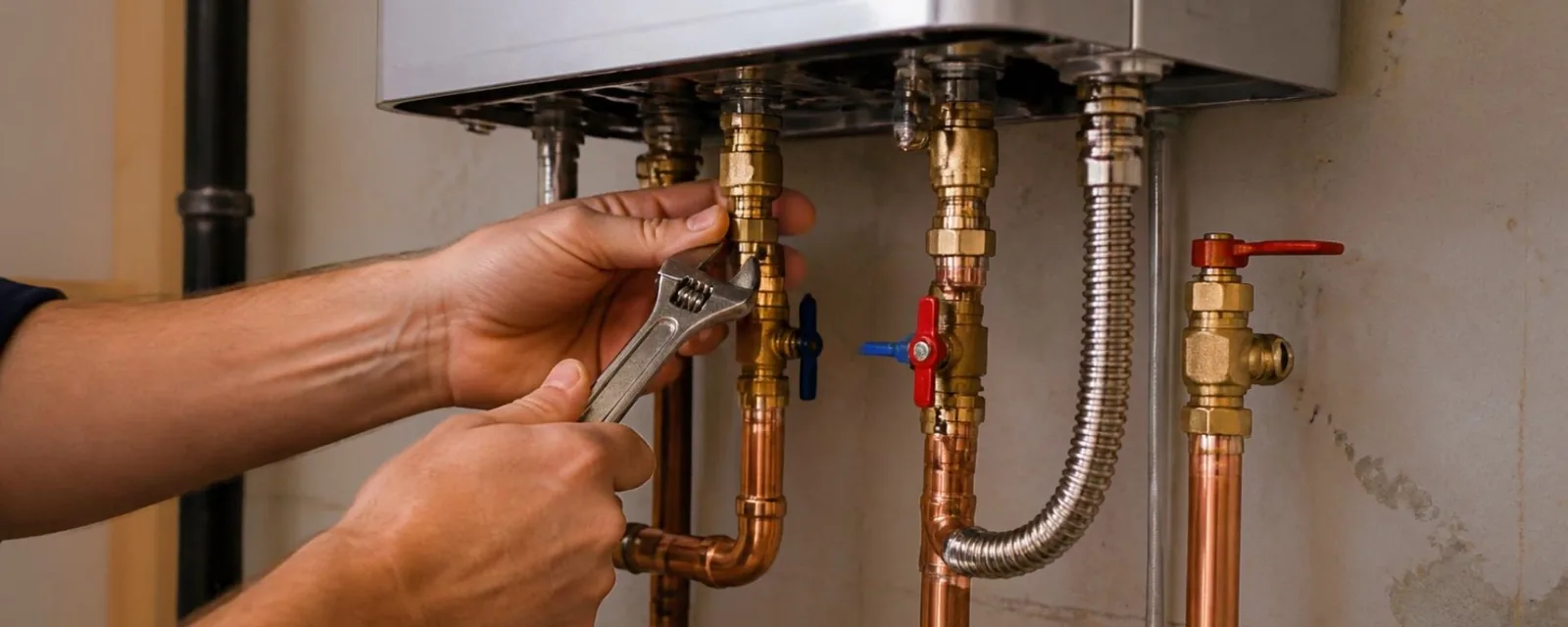
Water heater installation is the planned work of setting a new unit in a home that has no heater yet, is changing fuel, or is moving the heater to a better spot. It differs from an emergency swap because you have time to pick the unit, check the vent and electrical needs, and schedule a visit that suits you. Milton Pro Plumbing offers same-day appointments when available and gives a clear price before work starts.
Questions people ask when planning a water heater installation
Installation is planned work on your timeline: a new build, a fuel change, a move to another room, or a swap done before the old unit fails. Replacement is usually a response to a tank that has already failed. If yours is leaking now, read about water heater replacement and call the 24/7 line.
Usually, but it is a design job. The new spot needs a drain or pan outlet, supply and return pipes, a vent path for gas units, and power for electric or heat pump models. Longer pipe runs lose heat, so the plumber may suggest insulating them. Expect the permit to cover the relocation.
Plumbing work in Massachusetts must be done by a licensed plumber, and gas fitting has its own licensing under the same Board. Electrical work for an electric or heat pump unit falls under a licensed electrician. Ask who is doing each part and who pulls which permit.
Book as soon as the heater shows warning signs like rust colored hot water, popping sounds or a damp base. Same-day slots are offered when available, but a planned install lets you choose a unit and confirm the vent and circuit before the day arrives.
Ask before you agree to the work. Removal and disposal differ between companies, and the answer should be in the quoted price. A drained tank is still heavy and awkward on basement stairs.
They can, if the room has open space around the unit and a place for condensate to drain. They pull heat from the room air and leave it cooler, which many homeowners like in a damp basement. A tiny closet usually will not give them enough airflow.
Call us with the addresses and the fuel type for each. Tenants affected by a shutdown need notice, so scheduling the water off windows ahead of time is part of the plan. Each unit needs its own permit and its own inspection, whether the building is in Milton or over the line in Quincy.
Rather talk it through? Call and ask a plumber.
(617) 752-0573Storage, tankless and heat pump compared
Each type changes what the install requires, so the choice comes first.
| Feature | Storage tank | Tankless | Heat pump |
|---|---|---|---|
| Hot water supply | Limited by tank size | Continuous flow, limited by flow rate | Limited by tank size, slower recovery in heat pump mode |
| Space needed | Floor space for the tank | Wall mount, small footprint | Floor space plus open air around it |
| Fuel and service | Gas or electric | Large gas line or heavy electrical service | Dedicated electrical circuit |
| Venting | Flue for gas units | Dedicated flue for gas | Usually none, condensate drain instead |
| Install effort | Simplest | Often a gas line and vent upgrade | Circuit, drain and clearance |
Tankless details are on the tankless water heater page.
What happens on install day
Walk the site
The plumber checks the room, the shutoffs, the vent path and the electrical panel before touching anything.Pull the permit
A licensed plumber obtains the permit from the local plumbing inspector. You can ask to see it.Set the base
A drain pan goes under the new unit, with a pipe to a drain or an outdoor point.Connect water, fuel and vent
Supply lines, relief valve piping, gas or electrical connections and the flue are made up and tested.Fill and commission
The tank is filled and purged, the controls are set, and the plumber shows you the shutoff and the temperature setting.
Questions about water heater installation? Call a plumber
Licensed plumbers are dispatched day and night, and you hear the price before work starts.
Gas lines, wiring and who is licensed for what
A gas heater needs a gas supply sized for its burner, a shutoff valve at the appliance, and a sediment trap on the line. An electric or heat pump unit needs a circuit sized for its load, and the breaker must match the wire. These are different trades, and each has its own licence.
Be direct when you call. Ask who will do the gas fitting, who handles the wiring, and who pulls each permit. A plumber who says the whole job is theirs should be able to explain which license covers which piece. You can check any plumber on the state's eLIPSE portal or by calling the Board of State Examiners at 617-727-9952.
Those licence lines come from the Board of State Examiners of Plumbers and Gas Fitters, and 248 CMR 10.00 is the standard the work is held to.
Venting and combustion air
A gas storage heater exhausts hot gases through a flue that must slope up and stay sealed. Tight, modern basements can starve a burner of combustion air, which risks back drafting. The plumber looks at the room volume and the vent path to see if an air supply opening is needed.
If you are moving a heater in an older Milton house, the old chimney flue may be too large for a modern unit. With a median home age of 71 years in town, many houses have chimneys that were built for oil or coal. A liner or a new side wall vent may be the cleaner solution, and the plumbing inspector can say what the town expects.
New construction and additions
In a new build or addition, the heater location is set during rough in, when pipes and vents are still open. Put it close to the bathrooms and kitchen to cut wait time at the tap, and leave room for service access. Heat pump and tankless plans should be settled before the walls close. For related work in a build, see plumbing installation.
What affects the price of an installation
The plumber quotes a clear price before work starts. The usual drivers are below.
Unit type
Tankless and heat pump models need more parts and more setup than a basic tank.
Fuel changes
Switching from gas to electric, or the reverse, means new lines, circuits or venting.
Distance moved
Longer pipe, vent and wire runs raise materials and labor.
Permits and inspections
Permit work and any second trade, such as an electrician, are part of the scope.
Removal and cleanup
Confirm whether the old unit's disposal is included.
Planned upgrades are usually not covered by homeowners insurance. Sudden water damage from a failed heater may be, so read your policy or ask your insurer.