
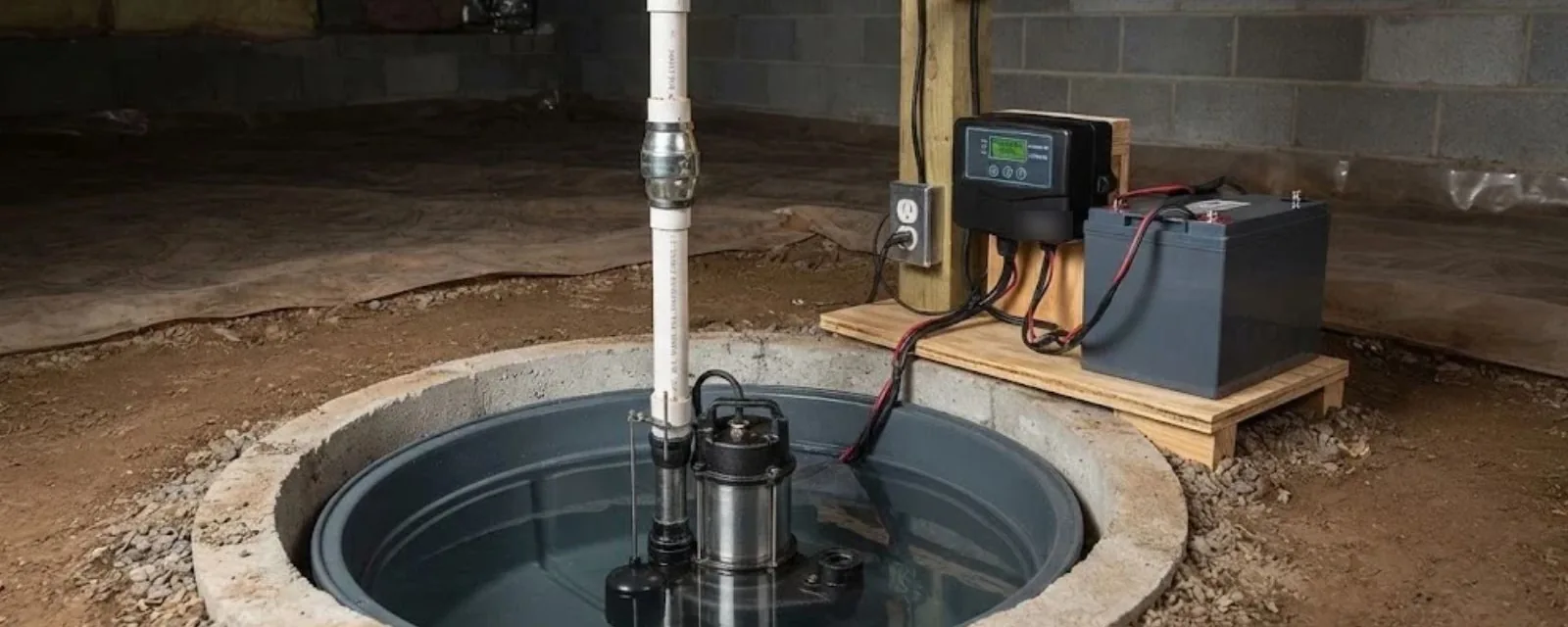
A sump pump sits in a pit in the lowest part of the basement, collects groundwater and sends it outside before it reaches the floor. When the pump stops, water rises in the pit and then in the room. Licensed plumbers are dispatched 24/7 from Milton Pro Plumbing for failed pumps, storm nights included. While you wait, stay away from standing water if anything electrical is wet, and lift stored boxes onto shelves.
New installations and battery backups are planned jobs, scheduled for same-day or next-available appointments when the basement is dry.
Questions people ask before calling about a sump pump
Yes. Emergency dispatch runs 24/7, and a pump that has quit while water is rising is exactly the call it exists for. Tell the dispatcher how high the water is, whether the pump hums or is silent and whether the power is on. New installs and backup upgrades are scheduled work and are not rushed through at night unless water is coming in.
Do not connect it without asking. Stormwater and groundwater in the sewer can overload it, and Braintree publishes a rule that sump pumps must discharge away from the sewer. We do not claim a specific Milton rule here. Before connecting anything to a sewer line, phone Milton Water and Sewer at 617-696-5731.
A sump pump moves groundwater and stormwater from a pit to the outdoors. An ejector pump moves sewage from a basement bathroom or laundry up to the sewer line, and it has a sealed lid and a different pump built to pass solids. They are not interchangeable, and each needs its own pit.
If your basement floods during storms, it is usually the best addition you can make, because storms are exactly when the power goes out. A backup pump runs from a battery for a limited number of hours, so it buys time rather than replacing the primary. Sizing depends on how much water your pit receives.
Check that the discharge line outside is not frozen, kinked or buried under a drift of leaves, and that the check valve is facing the right way. A pump that spins without moving water may have an air lock or a broken impeller. If the pit is filling faster than the pump can empty it, call.
Message the landlord or property manager now, in writing, and photograph the waterline on the wall. The owner normally arranges pump repairs. A property manager can call the 24/7 line and approve the visit so the plumber is not waiting for permission while the water rises.
Rather talk it through? Call and ask a plumber.
(617) 752-0573There is water on the basement floor after the rain. Why did the pump not catch it?
Either the pump failed, or it could not keep up. A dead motor, a stuck float, a clogged intake or a power outage all leave the pit to overflow. A pump that runs flat out and still loses is simply too small for the inflow, which a plumber can tell by watching how fast the pit fills.
Sump pump installation and repair means getting the pit, the pump, the check valve and the discharge line working as one system, so water leaves the house as fast as it arrives.
What to do when the basement is taking on water right now
Water on a basement floor can reach outlets, the furnace, the water heater and the electrical panel. Safety comes first, and the plumber dispatched around the clock works from that same order.
- Do not walk into standing water if outlets, power strips or appliances are in it. If the panel is in the basement and the water is rising near it, call the electric utility from upstairs.
- Check the outlet. A tripped GFCI is a common cause of a pump that seems dead, but only reset it if you are standing on a dry floor.
- Unplug the pump first, then lift the pit lid and look. If the float is stuck against the wall, free it, plug the pump back in and watch it run.
- Move valuables, boxes and electronics onto shelves or upstairs, and use a wet vacuum or buckets to slow the rise.
- Call, and tell the dispatcher about the water depth and any smell. A sewage odor means the water is not groundwater.
What Milton's flooding history means for your pump
The Town's 2020 resilience workshop found flooding concentrated along the banks of the Neponset River, a tidal river where flooding below the dam often matches king tides. If you live near the river, test the pump before a storm and a high tide arrive together, and consider a battery backup.
Reports also came from around Turner's Pond, Pine Tree Brook and Unquity Brook. Homes near those waters should size the pump for heavy rain and ask neighbors what earlier storms did to their basements.
In East Milton, storm surge was described as backing sewers up into homes. A sump pump does nothing against that, because the water comes through floor drains, not the pit. If foul water appears at a floor drain, stop using sinks and toilets and call. Culvert upgrades were named a top priority, which tells you street drainage can be overwhelmed, so plan the pump for the heavy storm.
Sump Pump Installation & Repair emergency? Call the 24/7 line
Licensed plumbers are dispatched day and night, and you hear the price before work starts.
Primary pump versus battery backup
Most protected basements use both. They do different jobs.
| Feature | Primary pump (AC) | Battery backup pump |
|---|---|---|
| Power source | House electricity | A deep-cycle battery that charges while power is on |
| Job | Handles normal rain and daily groundwater | Takes over when the primary fails or power drops |
| Capacity | Sized to the inflow of your pit | Usually moves less water per minute |
| Run time | Unlimited while power is on | Limited by battery charge, from hours to a day depending on load |
| Maintenance | Test each season, clear the float and intake | Check battery date and charge, test the alarm |
| Best for | Every home with a pit | Homes where storms bring outages or deep flooding |
A high-water alarm on the backup warns you before the pit overflows.
The check valve, the pit and the float
The check valve sits on the discharge pipe above the pump and stops water from running back into the pit after each cycle. Without it, the pump re-pumps the same water over and over until it burns out. A rattling thump when the pump stops is the valve closing, and silence with a pump that short-cycles often means it has failed.
The pit should have a liner, a solid bottom and a lid. Silt that washes in jams impellers, and a float that scrapes the wall will not switch on. These small fixes cost less than a new pump.
Where the water goes: discharge rules
Discharge belongs outdoors, with the pipe ending several feet from the foundation and sloping away from it. If the water returns to the house, the pump cycles endlessly.
Sewer connections are a different matter. The Braintree Water and Sewer Department says sump pumps must discharge away from the sewer, and we mention it as an example of a common municipal rule, not as Milton law. Ask Milton Water and Sewer before connecting anything to a sewer, and the Milton plumbing inspector can say what permits new piping needs.
Plumbing work around the pump follows the Massachusetts Uniform State Plumbing Code, 248 CMR 10.00, the standard the local inspector applies.
Ejector pumps are a separate machine
If a basement bathroom, laundry or utility sink sits below the sewer line, an ejector pump lifts the waste up to it. It sits in a sealed basin with a vent and moves solids that a sump pump would choke on. Ejector installation is planned work, and the plumber sizes the basin and routes the vent. If the sewer line itself is the trouble, a camera inspection helps.
What a new sump pump installation involves
Planned installs follow a steady order.
Walk the basement
The plumber finds the low point, checks existing drains and decides where the pit should go.Cut the floor and dig the pit
A section of slab is opened, the soil removed and a liner set in the hole.Set the pump and float
The pump sits on a firm base, with the float clear of the walls.Run the discharge
Pipe with a check valve leads outdoors and ends away from the foundation.Test under load
Water is poured in and the plumber watches the pump cycle, the valve and the discharge.
What affects the price of a sump pump job
Pricing is stated up front, before the pit is touched. Here is what changes it.
New pit or existing pit
Breaking the slab and digging a pit adds labor that a swap in an existing pit does not need.
Pump capacity and type
Higher flow, cast bodies and ejector models cost more than basic units.
Battery backup and alarm
The backup pump, battery and controller add parts and setup time.
Discharge route
A long run, a trench or a wall penetration takes longer than a short exit near the pit.
Insurance note: sudden and accidental water damage is often covered, while groundwater seepage and flood damage may need a separate policy. Read your policy or ask your insurer.
Related fixes around the pump
A pump only moves water that has reached the pit. Gutters, grading and drain tile decide how much arrives, and our basement waterproofing page explains those fixes. New piping and basins also fall under plumbing installation, with the permit rules that apply.