
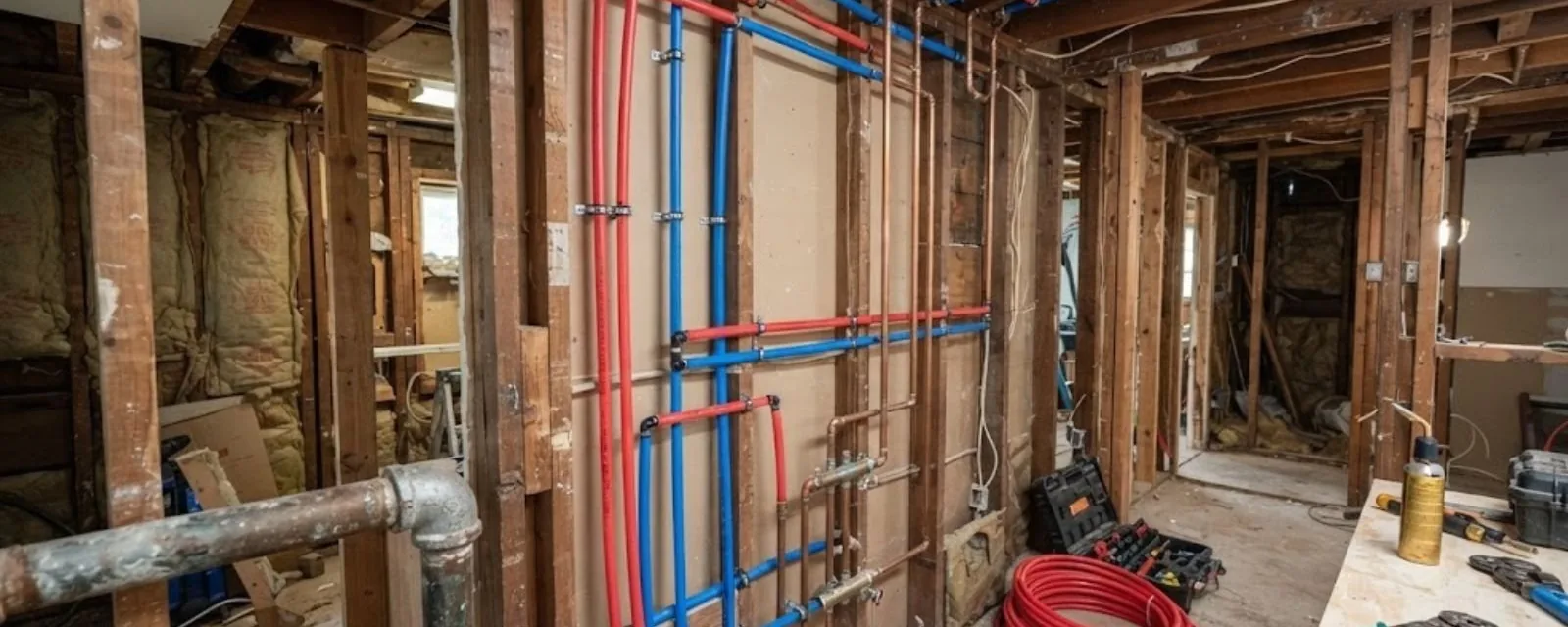
Repiping means replacing the water supply pipes inside a house, from where the line enters to every faucet, so the old corroded or leaking pipe is gone for good. Milton Pro Plumbing sends licensed plumbers who look at the pipe, explain what they find and give a clear price before work starts. Same-day appointments are offered when available. For a burst pipe tonight, see our burst pipe repair page.
Questions people ask before calling about repiping
One leak in sound pipe is a repair. Repeated leaks in different spots, brown water at the tap, pressure that falls year after year and pipe that looks flaky or swollen point toward replacement. Galvanized steel, which rusts from the inside, usually needs it. The plumber checks the pipe condition before recommending either.
No. A plumber can tell you what the pipe is made of and what shape it is in, but not what is in the water. For that, read your utility's water quality report or use a lab test. Milton gets its water from the MWRA, and Milton Water and Sewer can point you to the current report.
Phone Milton Water and Sewer on 617-696-5731 and ask what the Town's lead service line inventory shows for your address. The Town maintains the line to the curb stop valve and you maintain it from there to the house, so the owner side is your responsibility. A plumber can identify the pipe material when the line is exposed.
Sometimes. Plumbers use closets, basements, attics and cabinet backs wherever possible and cut small access holes in the rest. Plaster, tile and finished ceilings make access harder than open framing. Ask for a plan that names each opening, and ask who patches and paints.
Yes. Replacing piping needs a permit from the local plumbing inspector under Massachusetts rules, and only a licensed plumber can pull it. You can ask to see the permit and verify the plumber's license in the state eLIPSE portal. Local steps come from the Milton plumbing inspector.
Yes, if the risers and shutoffs allow it. A phased plan can work around tenants, with each unit shut off for set windows. The plumber looks at how the building is plumbed before offering a schedule, and the landlord should give tenants written notice of each shutoff.
Rather talk it through? Call and ask a plumber.
(617) 752-0573Rusty or brown water, low pressure and pinhole leaks: are the pipes at the end of their life?
Those three symptoms often travel together. Old steel pipe rusts from inside, the rust narrows the bore and flakes into the water, and thin spots eventually open into pinholes. Repiping is the full replacement that ends that cycle, instead of patching one failure after another.
Signs your supply pipes are wearing out
Several of these at once is a strong case for replacement.
- Brown or orange water at the tap, especially first thing in the morning.
- Water pressure that has dropped over the years at several fixtures.
- Pinhole leaks or green and white crust at pipe joints.
- Pipes that look flaky, swollen or stained with rust.
- Repair after repair on the same line.
- Metal taste, or hot water that runs weaker than cold.
- A plumber noting galvanized steel pipe during an unrelated job.
What the MWRA says about old pipes and brown water
The MWRA, the only source of water for Milton, notes that old water pipes can develop tuberculation, a buildup of corrosion that can cause an occasional red, yellow or brown color in water. Discolored water that comes from the tap in your house but not a neighbor's points toward your own aging pipe.
The treatment also adjusts pH and alkalinity to reduce how much lead and copper dissolves from home plumbing. That helps, but it does not replace failing pipe. A plumber cannot tell you whether water is safe to drink. For that, check the utility's report or use a lab test.
Questions about repiping? Call a plumber
Licensed plumbers are dispatched day and night, and you hear the price before work starts.
Why Milton homes reach this point
In the Housing Production Plan's count, 46.8% of homes pre-date 1940, 28.5% went up between 1940 and 1959, and the median age is 71 years. In a house that old, original steel supply pipe may still be in the walls, or a patchwork of steel, copper and newer sections.
That mix tells you the work may be larger than it looks. Replacing a single bathroom run while the rest is original steel can leave you with new pipe attached to old, and the old pipe becomes the next leak. Ask the plumber to describe all the pipe, not only the section that failed.
Lead service lines: the Town side and the owner side
The Town of Milton maintains the water service line from the street main to the curb stop valve. Past the curb stop valve, the line to the house belongs to the owner. Milton has built its own lead service line inventory, and a replacement plan went to MassDEP in October 2024.
If you repipe inside the house, ask what the line looks like where it enters and whether the owner side is lead. Raise it with Milton Water and Sewer before the interior work starts, so the two projects can be planned together.
Copper or PEX: comparing the two common choices
Both are widely used for supply lines. What your house may use is decided under the Massachusetts Uniform State Plumbing Code (248 CMR 10.00) and by the local plumbing inspector.
| Point | Copper | PEX |
|---|---|---|
| What it is | Rigid metal tube joined with solder or fittings | Flexible plastic tube joined with crimp or expansion rings |
| Strengths | Long record, withstands heat, rigid and neat | Bends around corners, fewer joints, easier to fish through walls |
| Cautions | Can pit in some water, needs more joints and labor | Must be protected from sunlight and from kinking, needs proper supports |
| Access needed | More openings, since runs are straight | Fewer openings, long runs pulled through walls |
| Best fit | Exposed basement runs and visible work | Finished houses where wall opening must be limited |
Mixing materials is common, and the plumber uses approved transition fittings at each change.
Phased work or the whole house at once
A whole-house repipe replaces every supply line in one project. It ends the leak risk and is usually more efficient, because the plumber opens each area once. Phasing spreads the work over time: kitchen and bathrooms first, the rest later. It keeps the cost spread out, but it means opening walls more than once and living with old pipe in the meantime.
The right choice depends on the pipe condition, your budget and how much disruption you can accept. Ask for both options in writing with the clear price before work starts.
Wall access and how much repair follows
The plumber looks for the shortest path to each fixture: unfinished basements, attic floors, closets and the backs of cabinets. Where none exist, small openings are cut at the fixture and at points along the run. Plaster and tile are harder to patch than drywall, so ask how each opening will be handled.
Patching and painting are not always part of the plumbing scope. Ask who handles them, and whether the price includes them, before you agree.
What to expect, day by day
A whole-house job usually takes several working days. The plumber sets the actual schedule after seeing the house.
Day one: walk-through and permit
The plumber maps every fixture, names the pipe route, pulls the permit and protects floors and furniture.Next days: open and run new lines
The main is shut off for set windows, access holes are cut and new pipe is run to each fixture.Connect and test
New pipe is tied into the main and fixtures, and the system is pressure tested before anything is closed up.Inspection
The local plumbing inspector checks the work, which is why the permit matters.Restore and flush
Water is turned back on, aerators are cleaned and the lines are flushed to clear debris.
Permits and licensing
Only a licensed plumber can pull the repiping permit, and you can check a license and discipline history in the state eLIPSE portal or by calling the Board at 617-727-9952. That code is the standard a plumber's piping work is held to.
What affects the price of repiping
Before any pipe is opened you get a clear price, and these factors shape it.
House size and fixture count
More bathrooms, kitchens and laundry hookups mean more pipe and more connections.
Pipe material
Copper and PEX need different parts and labor, and your inspector decides what is accepted.
Wall and floor access
Open framing is fast, while plaster, tile and finished ceilings add cutting and patching.
Phasing
Doing the house in stages adds visits and repeat setup.
Related items
Shutoff valves, pressure regulators, water heater connections and the service line may need replacing as well.
Insurance note: replacing pipe because of age is normally treated as maintenance, not a covered loss. Check your policy or ask your insurer to be sure.
Related work
Hidden leaks that led you here can be located first through leak detection. New fixtures and rerouted lines fall under plumbing installation, and homeowners in nearby Canton are welcome to call too.