
The cheapest way to waterproof a basement is to stop water before it reaches the wall. That means clean gutters, downspouts that discharge well away from the house, and soil that slopes away from the foundation. These fixes cost little compared with interior drains or exterior excavation, and they solve a large share of damp basements.
Work up the ladder one rung at a time. Each rung below is more involved than the last, and you should move up only when the cheaper one has been tried and the water is still coming in.
The ladder of fixes, from least to most involved
| Rung | What it addresses | Who usually does it |
|---|---|---|
| 1. Gutters and downspouts | Roof water dumped at the foundation | Homeowner |
| 2. Grading and splash blocks | Surface water running toward the wall | Homeowner or yard contractor |
| 3. Sealing cracks and gaps | Small inflow points and damp spots | Homeowner or mason |
| 4. Dehumidifier and air flow | Humidity and condensation, not leaks | Homeowner |
| 5. Sump pump and interior drain | Groundwater that rises with the water table | Licensed plumber |
| 6. Exterior excavation and membrane | Persistent wall seepage | Excavation contractor, with a plumber for drains |
Condensation, not leakage, is the cause of many damp basements. The next section shows how to tell.
First, find out what kind of wet you have
Three different problems can look the same. Run a simple check before spending anything.
Tape a square of foil
Tape a foil patch to a damp wall, sealing all four edges. Check after a day.Read the foil
Water on the room side means condensation. Water under the foil means moisture is coming through the wall.Watch after rain
Note whether wet spots appear only during or after storms.Look at the floor edge
Water at the floor and wall joint often means high groundwater, not a wall crack.Check the sewer drain
Water coming up from a floor drain is a sewer issue, which belongs with a plumber right away.
Rungs 1 and 2: gutters, downspouts and grading
A roof sheds a lot of water in a storm. If a downspout drops it beside the foundation, that water goes down along the wall. Extend each downspout several feet from the house, or run it into a pipe that carries it away.
Then look at the ground. Soil should fall away from the house, not toward it. Add compacted fill near the foundation if soil has settled, and keep mulch and flower beds from trapping water against the wall.
Rungs 3 and 4: cracks, sealers and humidity
Hydraulic cement and masonry crack fillers can stop small inflows at narrow cracks. Paints and sealers help with damp walls but do not stop water under pressure.
A dehumidifier handles condensation. It will not solve a leak. If the machine fills its bucket daily, ask whether the water is coming from the air or from the walls, since the answer decides the next rung.
Rung 5: when a plumber is the right call
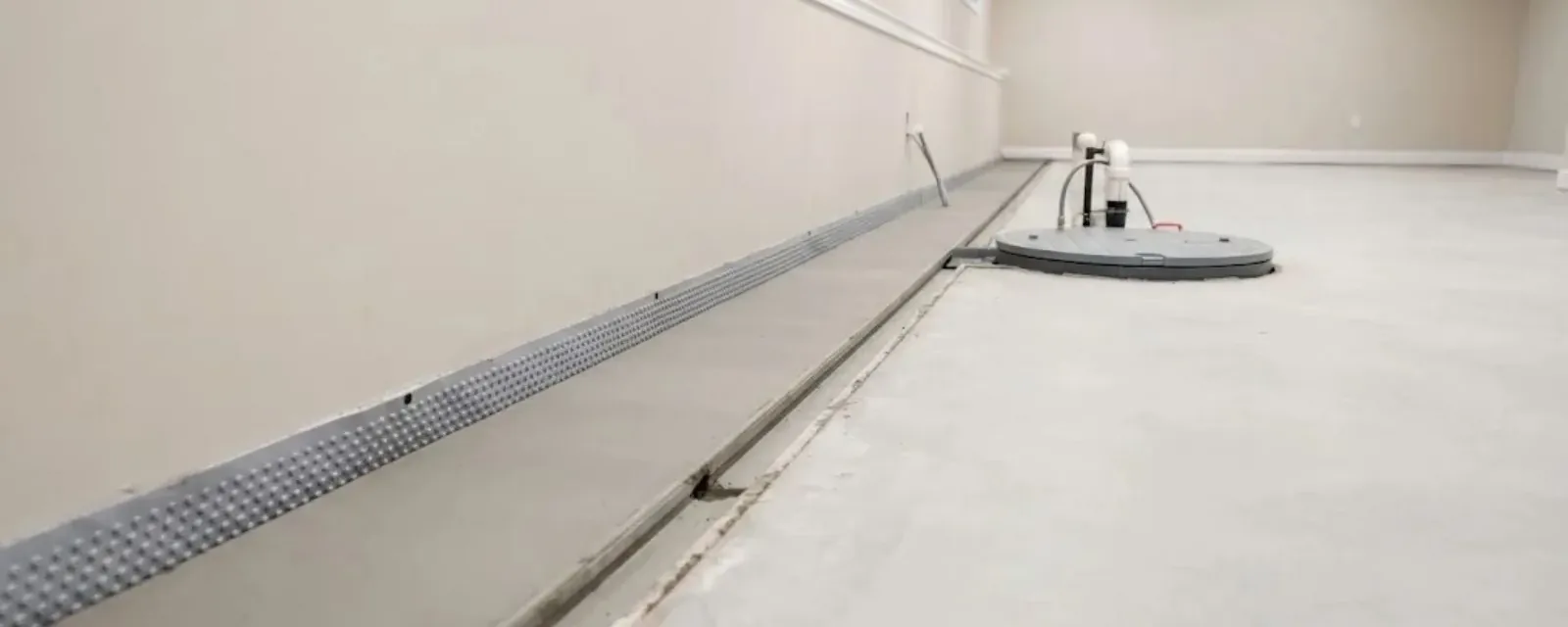
When water rises at the floor edge or after storms, the fix is usually to give it somewhere to go. A sump pump in a pit collects groundwater from a perimeter drain and pushes it outside. Basement waterproofing by a plumber often means that drain, the pit, the pump and a discharge line.
A plumber can install and repair that system, check that the pump discharges away from the house, and add a backup. A plumber cannot treat mold, repair a structural crack in a wall, or fix a bowing foundation. Those need a mold remediation company or a structural engineer.
What to do if water is already rising in the basement
Standing water can hide electrical hazards. Safety comes before saving belongings.
- Stay out of the water if outlets, appliances or the panel are low or wet.
- Turn off power at the main breaker only if you can reach it dry and safely, otherwise call the utility or 911.
- If water is coming from a floor drain, stop using sinks, showers and toilets.
- Move valuables up and take dated photos for any claim.
- Call the 24/7 emergency line for pumping and a sewer check.
Rung 6: exterior work and the Dig Safe call
Digging outside to expose the foundation, patch it and add a membrane and drain is the most involved fix. Before any digging, Dig Safe needs 72 business hours of notice by phone at 811 or 888-344-7233. Weekends and holidays do not count, a ticket lasts 30 days, and homeowners must call like anyone else.
Because of that wait and the machine work, exterior waterproofing is a planned project. Use it only after the cheaper rungs have failed and a professional has confirmed the wall is the source. Ask the contractor to show you where the water enters before agreeing to dig, since a wrong guess is expensive to undo. Also ask how the finished work will be inspected after the first heavy rain.
According to Mass.gov, the Dig Safe rule applies to homeowners as well as contractors.
How to compare quotes for any of this
Ask each contractor to name which rung they are proposing and why the cheaper ones will not work. Ask what the contractor puts in writing, what happens if the system fails in a storm, and how the sump discharge is handled. Pricing in writing before work begins keeps the comparison fair.
Milton, MA specifics: old foundations and Neponset flooding
Source type: Milton housing plan and April 2020 flood findings
The Housing Production Plan counts 46.8% of local homes as pre-1940 construction. Foundations of that age have had decades to settle and crack, so expect some seepage and start with the outside fixes before spending on interior work.
The 2020 resilience workshop placed flooding along the Neponset River banks and also near Unquity Brook, Pine Tree Brook and Turner's Pond. If your house sits near any of them, groundwater may rise with high water, which points toward a sump pump with a backup rather than only gutters.
The same findings describe East Milton surge water backing sewers up into homes. Water that rises from a floor drain can be sewage rather than groundwater, and no wall sealer will stop it. Ask a plumber about a backflow valve or a sewer check.
Questions readers ask about this topic
Masonry sealers and paint can slow dampness on the wall surface. They do not stop water pushing through under pressure, and trapped water can peel the coating. Fix the water source first, then use a coating for finish.
Only if the problem is humid air. If walls leak or groundwater rises, the machine just empties a bucket every day. Use the foil test to see which problem you have.
Policies often treat groundwater seepage and surface flooding differently from a burst pipe, and some exclude them. Your own policy wording governs, so check with the insurer, and ask about sewer backup cover separately.
Ask the local building department and the plumbing inspector. Plumbing work generally goes through a licensed plumber and permit rules. Braintree's water and sewer department tells residents to route sump discharge away from the sewer, so check your own town's rule before assuming. Neighbors in Braintree and Canton face different local steps than Milton.
Test it each season by pouring water into the pit, and consider a battery backup for power loss. Keep the discharge line clear and pointed away from the house.
No. Gutters, downspouts and grading still help, and they cost little. In a flood-prone spot, treat them as the first layer and plan a sump pump with backup as the second.
Rather talk it through? Call and ask a plumber.
(617) 752-0573