
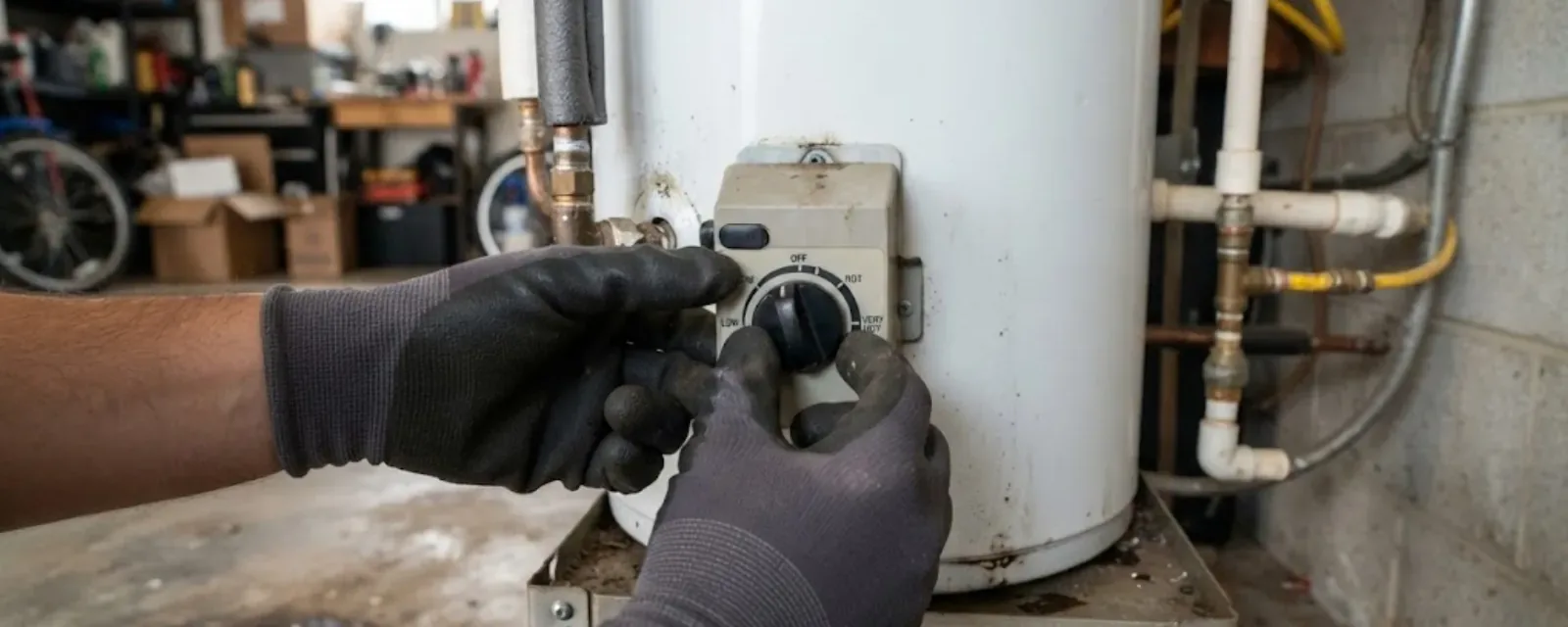
Replacing a heating element in an electric tank water heater is one of the cheaper water heater repairs, and its cost depends mostly on labor time, the type of element, and whether the tank is worth saving. The part itself is small. What you pay for is the shutoff, the drain-down, the testing with a meter, and the judgment about whether the tank behind it is still sound.
This guide explains the symptoms of a bad element, the cost drivers with no price tag attached, how to compare an element repair with a new tank, and what you should never try yourself.
What goes into the final price
The element part is a modest piece of the quote. Labor, access and what else turns up during the work decide the rest. Understanding the list lets you read an itemized quote instead of guessing.
Upper or lower matters. A lower element sits beneath sediment and insulation, so the tank must be drained and flushed before it comes out. An upper element is usually quicker but sometimes both are replaced together, since the second one is the same age and often fails soon after.
- Single or both elements, and the type, such as a standard screw-in or a different fit.
- Thermostat testing or replacement if the thermostat fails the meter check.
- Draining and flushing time, which grows when sediment is thick.
- Seized or corroded elements that fight removal and need extra time.
- Access to the tank and the distance to a floor drain or hose bib.
- Whether the plumber also tests the circuit, the wiring and the temperature relief valve.
Fix the element or replace the tank?
The element is cheap compared with a tank, so the question is whether the tank will outlast the repair. Use this table as a starting point.
| Situation | Better move | Why |
|---|---|---|
| Tank is young, no leaks, one element failed | Replace the element | The tank has years left and the repair is small |
| Tank is near the end of its normal life and both elements are tired | Compare a repair to a new tank | Another failure may follow soon after |
| Water around the base or rust at the tank seams | Replace the tank | A leaking tank cannot be repaired |
| Element is seized in a corroded fitting | Ask for options | Forcing it can crack the tank opening |
| Home needs more hot water than the tank gives | Consider a larger tank or tankless | A new element will not change capacity |
A water heater repair is worth doing when the tank is sound, but it should not become a monthly habit.
What a careful plumber does, in order
Knowing the order helps you spot shortcuts. The process is the same whether a plumber or a licensed electrician handles the electrical side.
Cut the power at the breaker
They switch off the breaker, then confirm with a meter that both legs at the heater are dead before touching a wire.Test the elements
A meter reading across each element shows whether it is open or shorted. The thermostat is checked too, so you do not pay for a part that was fine.Shut the water and drain below the element
The cold supply is closed, a hose runs to a drain, and the tank empties to below the element level. The pressure relief valve is opened to let air in.Swap the element and refill
The old element is unscrewed, a new gasket goes in, and the tank is refilled with a hot tap open to bleed air. Power stays off until the tank is completely full.Restore power and verify
The breaker goes on, and the plumber checks amperage, heat-up and that no water weeps from the gasket.
Electrical safety: what not to do yourself
A water heater runs on 240 volts, which can kill you. Never open the access panel with the breaker on, and do not trust the heater's own switch as proof of power being off. A plain outlet tester does not work for this either.
If the breaker keeps tripping, the problem may be the wiring, the breaker itself or a ground fault in the element. In those cases an electrician may need to look at the circuit. Do not replace a breaker with a larger one to stop it tripping, because that hides a fault and can start a fire.
Permits and who may do the work in Massachusetts
Only a master or journeyman plumber licensed by the state may do plumbing work, and apprentices need direct supervision. The local plumbing inspector must issue a permit before plumbing is installed, altered, removed, replaced or repaired, and permits go only to licensed plumbers. Swapping a heating element does not involve piping, so ask the plumber and the Milton plumbing inspector whether a permit applies to your job.
A full tank swap does involve plumbing work. If the quote is for a new heater, ask to see the permit. You can verify a plumber's license on the state eLIPSE portal or by calling the Board at 617-727-9952.
How to compare quotes without a price list
Ask each plumber for a clear price before work starts and ask what it covers. A cheap quote that excludes the thermostat test, the flush and the disposal of the old part is not really cheaper.
If the answer is a new tank, compare it with a water heater replacement quote on the same terms: size, venting or electrical work, haul-away and permit handling. Insurance usually responds to sudden damage, such as a tank that bursts, and not to wear, so read your policy.
Milton, MA specifics: older houses and what the water carries
Source type: Town of Milton Housing Production Plan, MWRA treatment and community pages
The Town's Housing Production Plan found that the median Milton home is 71 years old, with 46.8 percent built in 1939 or earlier. In houses that age, the water heater is often installed in a cramped basement corner and the electrical circuit may have been upgraded in pieces. That affects the quote because tight access slows the work and an older circuit may need an electrician's eyes.
Milton's water comes only from the MWRA, which adds sodium carbonate and carbon dioxide to adjust pH and alkalinity. Old street mains can also develop tuberculation that sometimes sends an occasional red, yellow or brown tint into the water. Sediment from those sources settles at the bottom of a tank and can bury the lower element, so draining the tank yearly is worth doing.
Hardness for Milton is not published in the sources we trust, so we will not guess a number. If scale is a worry, ask Milton Water and Sewer at 617-696-5731 for the current water quality report, and ask the plumber what they find when they open the tank.
Questions readers ask about this topic
Many people try it, but the risks are real: 240 volts, a tank full of hot water and a gasket that must seat correctly. If you have no meter, no experience with the electrical side and no way to drain the tank, call a licensed plumber.
No hot water at all usually means the upper element or thermostat. Lukewarm water or a short supply of hot water points to the lower element. A plumber with a meter can confirm which one in a few minutes, so you replace the right part.
It depends on sediment, water conditions and how hard the heater works. Elements buried in sediment overheat and fail sooner. Draining the tank once a year removes some of it and helps both the elements and the tank last.
Yes, at least below the level of the element. Opening the element port on a full tank sends the whole contents onto your floor. The power must be off and the tank full of water before power returns, or the new element burns out within seconds.
Look at the tank, not the age alone. If there is no rust at the seams and no moisture at the base, a cheap element repair can buy time. If the tank is leaking or the shell is rusted, the repair will not help, and replacement is the better path.
Rather talk it through? Call and ask a plumber.
(617) 752-0573