
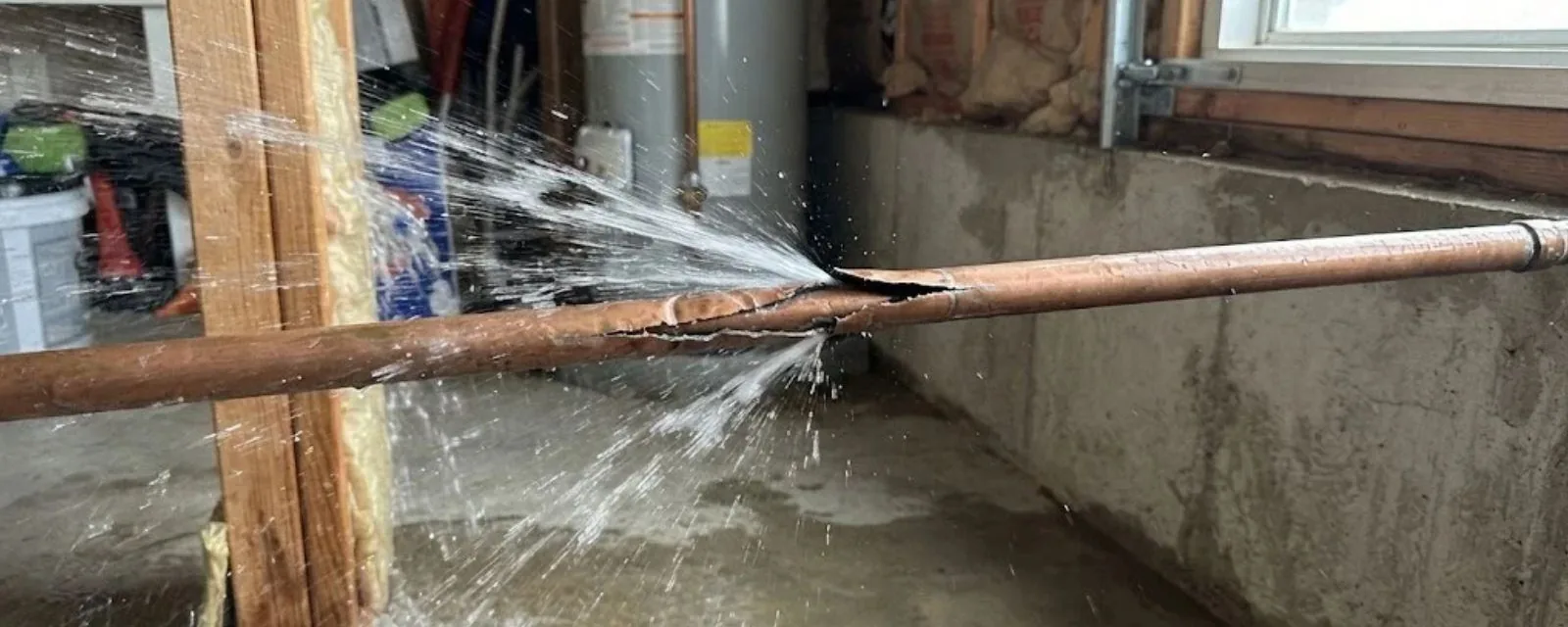
If a faucet gives you a trickle or nothing in freezing weather, a pipe is probably frozen. Open that faucet, find the frozen section by checking for frost, bulges or cold spots, and warm the pipe slowly with a hair dryer or warm towels, starting nearest the faucet. Never use an open flame. If the pipe is split or you cannot find the freeze, shut off the main water valve and call a licensed plumber.
Ice itself does not usually burst a pipe. Pressure trapped between the ice and a closed faucet does. The real danger arrives when the ice melts and water floods out of a crack you did not know was there.
How to thaw a frozen pipe safely
Only thaw a pipe you can see and reach. If it is behind a wall or you hear water running inside the wall, stop and call a plumber.
Open the faucet
Leave the tap on so melting water and steam have a place to go. This also relieves pressure and shows you when flow returns.Check for splits
Look along the pipe for cracks, dripping or wet insulation. If you see any, go straight to shutting off the main.Apply gentle heat
Use a hair dryer on low, a heating pad, or towels soaked in warm water. Start at the end nearest the faucet and work back toward the frozen part.Keep going until flow returns
It can take a while. Do not rush with stronger heat. Once water flows at full strength, check every joint for drips.Look at nearby pipes
If one pipe froze, the ones beside it probably came close. Warm the room and open cabinet doors under sinks on exterior walls.
Thaw methods compared: safe, risky, never
People have been hurt trying shortcuts. This table sorts the common ideas.
| Method | Verdict | Why |
|---|---|---|
| Hair dryer on low | Safe | Controlled heat you can aim, with no fire risk if the area is dry |
| Warm wet towels | Safe | Gentle and slow, easy to reapply |
| Heating pad wrapped on the pipe | Safe | Steady low heat, good for hard-to-reach spots |
| Space heater aimed at the room | Use with care | Keep it clear of anything flammable and never leave it unattended |
| Propane torch or open flame | Never | Fire risk in wood framing, and it can damage solder joints or boil water inside the pipe |
| Pouring boiling water over a pipe | Avoid | Can crack cold pipe and the runoff can scald or flood the floor |
Plastic pipe such as PEX or PVC can warp with heat, so keep to very low heat there.
When a frozen pipe has burst or is leaking
If water is spraying, dripping through a ceiling or pooling on a floor, treat it as a burst pipe. Fast action limits damage, and 24/7 emergency dispatch is available at any hour.
- Shut off the main water valve right away, turning it clockwise until it stops.
- Open the lowest faucet in the house to drain what remains in the lines.
- Switch off power to wet areas at the breaker only if the panel is dry and you can reach it safely.
- Move furniture, rugs and electronics away from the water, and take photos for your insurer.
- Call a licensed plumber for burst pipe repair and stay out of the wet area until it is safe.
Which rooms and walls freeze first in older houses
Exposed copper or galvanized pipe in a garage, crawl space, porch or attic is the usual suspect. Next come pipes in exterior walls, particularly on the north side, and pipes under a kitchen or bathroom sink against an outside wall.
Additions are a trap too. A bathroom built over a porch or a kitchen bump-out may have supply lines in a cold floor cavity. Look for those first, and open the cabinet doors under the sink so room air reaches the pipes.
Prevention before the next cold snap
Insulate exposed pipes with foam sleeves, seal air leaks around where pipes pass through the wall, and disconnect garden hoses. Shut off and drain outdoor spigots if your house has an interior shutoff for them.
On very cold nights, leave a small drip running at a faucet on an exterior wall and keep the heat on, even if you are away. Ask a neighbor to check on the house. If you plan to leave for a longer stretch, a plumber can drain the system.
After the thaw: finding hidden damage
A pipe can crack but hold shut while frozen, then drip once the ice melts. Check the thawed pipe, the wall below it and the ceiling beneath for stains or soft drywall for several days.
If your water bill climbs, the meter spins with all taps off or a wall feels damp, ask about leak detection. Methods such as acoustic listening and pressure testing can find a hidden split without opening whole walls. Ask any plumber what tools they bring.
Insurance usually covers sudden and accidental damage such as a burst pipe, but not gradual leaks or lack of maintenance. Policy wording decides, so read yours or ask the insurer. According to the Board of State Examiners guidelines, replacing burst piping needs a permit from the local plumbing inspector, pulled by a licensed plumber.
Milton, MA specifics: old walls, service lines and the main shutoff
Source type: Town of Milton Housing Production Plan, Town of Milton lead service line inventory page
About three quarters of Milton homes were built before 1960, and the median home is 71 years old. Houses from that era often have pipes in exterior walls, unheated crawl spaces, porches and additions that were never insulated like the main house. Those are the first places to check when taps run weak in freezing weather.
The water service line has two owners. The Town maintains it from the street main to the curb stop valve, and the property owner maintains it from the curb stop to the house. If water is gone at every tap and the neighbors have it, your section is the suspect, so call a plumber for your side and call the Water and Sewer Division at 617-696-5731 if you think the problem is on the Town side.
Know where your main shutoff valve is before winter, because in an older house it may be behind stored items, inside a wall cabinet or at the meter in the basement. Test that it turns, since a valve that has not moved in years may be stuck.
Questions readers ask about this topic
There is no fixed time. It depends on how cold the air is, how long it stays cold, wind, insulation and whether water is moving. Pipes in unheated spaces and exterior walls freeze first, while running water takes longer to freeze.
Yes, if you see a split, a leak or you cannot find the frozen part. Close the main and open the lowest faucet. If the pipe is only frozen and intact, you can leave the water on and thaw it with gentle heat.
It can. A crack that formed while the pipe was frozen may start to leak only once ice melts. Stay near the shutoff valve while thawing, and check joints and nearby walls afterward.
Yes. Keep the heat on at a steady, moderate setting, open the cabinet doors under sinks on exterior walls and have someone check the house. A plumber can drain the system if you will be gone a long time.
In Milton the Town maintains the service line from the main to the curb stop, and the owner maintains it from the curb stop to the home. If you cannot tell where the freeze is, call Milton Water and Sewer, and ask a plumber to check your portion. Nearby Canton and Quincy run their own water departments, so those rules differ.
Rather talk it through? Call and ask a plumber.
(617) 752-0573