
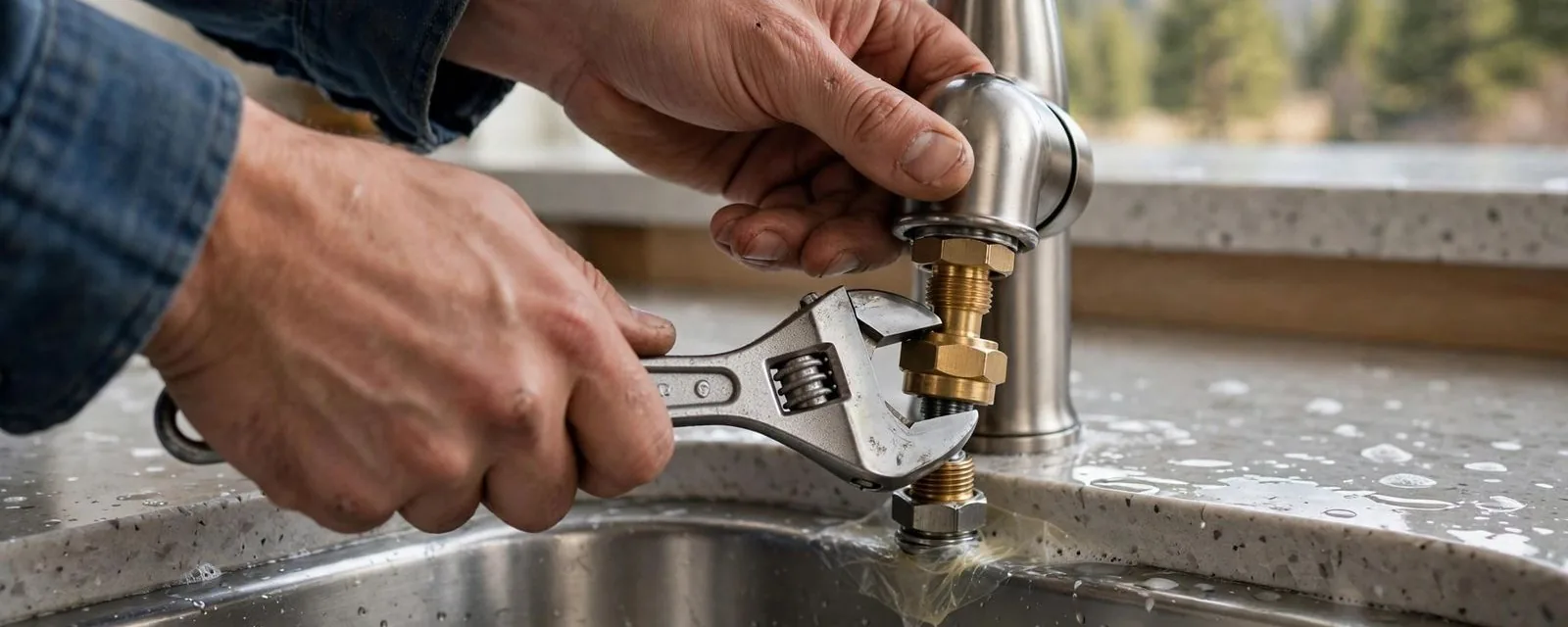
Faucet repair cost depends on five things: the faucet type, whether parts exist, the condition of the shutoff valves, how hard the faucet is to reach, and whether the fixture is worth fixing at all. A simple cartridge swap on an easy-to-reach sink is a small job. A corroded valve under a cramped vanity can turn the same drip into a bigger one.
This page gives no dollar figures because no honest number fits every faucet. Instead, it shows what pushes a price up or down and how to compare two written quotes so you pay for the same work in both.
The cost drivers, ranked by how much they usually matter
| Driver | Pushes the price down | Pushes the price up |
|---|---|---|
| Faucet type | Single-handle with a common cartridge | Wall-mounted, two-handle antique or pull-down spray with a separate hose |
| Parts | Part in stock at a supply house | Discontinued model or special order part |
| Shutoff valves | Under-sink stops turn fully and seal | Stops seize, leak, or break when turned |
| Access | Open cabinet and clear space | Tight vanity, pedestal sink, or a wall that must be opened |
| Condition | Only a washer, O-ring or cartridge is worn | Pitted body, cracked supply lines, or mineral-clogged ports |
| Time and trip count | One visit with parts on the truck | A second visit to fetch a part |
A plumber should tell you which row applies to your faucet before work starts.
Why a failed shutoff valve changes the whole job
A faucet repair starts with turning off the water at the small valve under the sink. If that valve will not close, the plumber must shut the water at a bigger valve, which can mean turning off the whole house.
A seized valve may snap or start to leak the moment it is touched. Replacing it is a separate piece of work. Quotes that mention the stops up front are easier to trust than quotes that surprise you later.
Repair or replace the faucet
Both options can be right. The deciding factor is usually the faucet's condition, not its age alone.
| Signs | Repair fits | Replacement fits |
|---|---|---|
| Drip from the spout | Worn cartridge, seat or washer | Body is pitted or cracked |
| Leak at the handle base | Worn O-ring or packing | Handle threads are stripped |
| Weak flow | Clogged aerator or screen | Corroded internal passages |
| Loose or wobbly body | Tighten the mounting nut | Mounting studs are broken |
| Finish peeling or pitted | Not repairable | Replacement is the realistic choice |
| Parts are no longer made | Not possible | Replacement, often with new supply lines |
Why the cheapest-looking fix can cost more later
A low quote that swaps one worn washer on a tired faucet may leave three other parts close to failing. If the plumber has to return for the next one, you pay for a second trip. Ask whether the cartridge, seats and springs are worth replacing together while the faucet is open.
The reverse is also true. Replacing a faucet whose body is sound just because a part is worn adds fixture cost you may not need. A good plumber explains both options and lets you choose.
When a dripping faucet cannot wait
A slow drip is a nuisance. Water spraying from the base, a line that will not shut off, or a cabinet floor that is soaking is different. Close the valve under the sink, or the main if that valve fails, and call. After hours, the 24/7 emergency line handles a supply line that will not stop leaking.
The permit rule that decides who can do what
Massachusetts treats a leaky faucet fix as a minor repair with no permit. Swapping or relocating a faucet, valve or piping does call for one, and the permit goes through a licensed plumber.
This matters when you compare quotes. A fix that stays a repair is simple. A swap to a new fixture may need the local plumbing inspector involved, and you can ask to see the permit. For local permit steps, the Milton plumbing inspector is the one to ask.
Look the quoting plumber up on the state licensing portal, or phone the board at 617-727-9952. A quote from someone who cannot pull a permit is a warning sign for any replacement job. The permit rule comes from the Board of State Examiners of Plumbers and Gas Fitters, and 248 CMR 10.00 is the standard the work follows.
Line items to compare when two quotes arrive
Ask each plumber to write the quote so the same items appear in both. Then check these points one by one:
- The faucet make and model, or a note that it is unknown until opened.
- Which parts are included: cartridge, seats, springs, O-rings, aerator.
- Whether shutoff valves and supply lines are replaced or reused.
- What happens if a valve fails when touched, and who decides the next step.
- Whether a permit is needed for the work and who pulls it.
- What the price covers if a second visit is needed for a part.
What to do before the plumber arrives
A little preparation shortens the visit and keeps the quote accurate.
Find the brand
Look on the faucet body, under the sink, or in old paperwork for a name or model number.Photograph the setup
Take pictures of the faucet, the cabinet beneath it, and the shutoff valves.Test the stops
Gently turn each under-sink valve a quarter turn. Stop if it resists or weeps.Clear the cabinet
Empty the space under the sink so the plumber can reach the fittings.Note the symptoms
Write down whether it drips, sprays sideways, runs weak, or only leaks when hot.
Milton, MA specifics: tired valves in aging houses
Source type: Housing Production Plan and MWRA community page for Milton
Since the median Milton house is 71 years old, older houses are more likely to have original shutoff valves that have not turned in years, so ask the plumber to test them first. A valve that fails during repair adds work, and knowing that before you book avoids a surprise.
Tuberculation inside aging pipes, as the MWRA's Milton page explains, can tint water red, yellow or brown now and then. Flakes from that rust can clog a faucet screen or wear a cartridge early. If your faucet clogs again soon after repair, mention the discolored water to the plumber.
Questions readers ask about this topic
They often cover different work. One may include new shutoff valves and supply lines while the other does not. One may price a cartridge and the other a full faucet. Put both in writing and line up the items.
Usually yes if the body is sound and parts are available. A steady drip wastes water and can stain the sink. If the faucet is old, pitted or the parts are gone, replacement is the more sensible path.
A simple cartridge or washer swap is a common homeowner repair when the shutoff valves work. Replacing valves or piping needs a licensed plumber and may need a permit, so know where to stop.
It should name the faucet, the work to be done, what parts are included, whether valves or supply lines are replaced, and what happens if the plumber finds something different. A price settled before work starts keeps the job honest.
State rules say minor repairs do not need a permit, but replacing a faucet does and must go through a licensed plumber. The Milton plumbing inspector can confirm local steps. See faucet repair for the repair side and plumbing installation for new fixtures.
Rather talk it through? Call and ask a plumber.
(617) 752-0573