
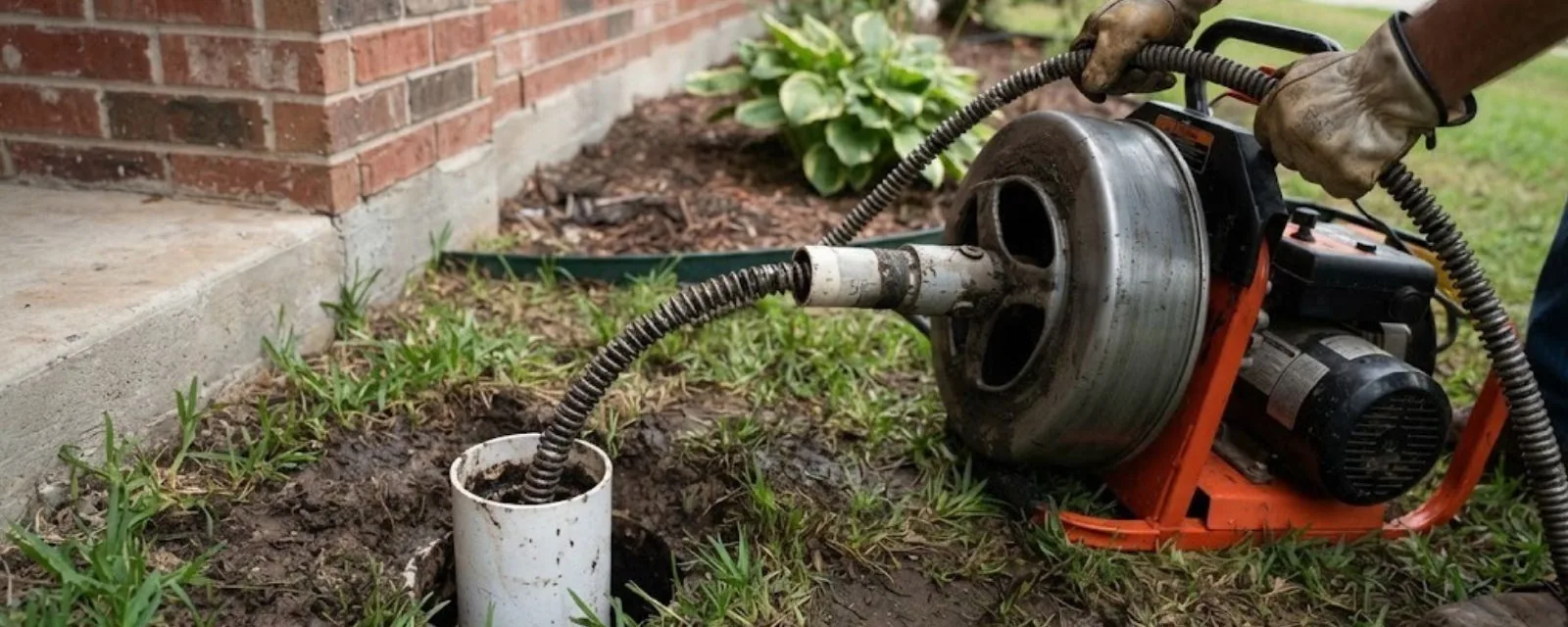
Cleaning a sewer line means clearing the main drain pipe that carries all of your household wastewater out to the street connection, using either a rotating cable with a cutting head or a high-pressure water jet. A clean line has a smooth bore and moves wastewater away quickly. Roots, grease, scale and flushed items narrow it until drains slow down or back up.
You can check for trouble and do a few safe things yourself. The cutting and the camera work belong to a licensed plumber.
What to check before you call
These steps help the plumber and sometimes save a visit. None of them need special tools.
Test several fixtures
Run the kitchen sink, a basement sink and flush a toilet. If only one backs up, the clog is local. If all do, the main is the suspect.Find the cleanout
Look for a capped pipe, often three or four inches wide, near the foundation where the line leaves the house, in the basement floor or in the yard. Note where it is.Stop adding water
Skip laundry, dishwashing and long showers while the line is backed up. Each gallon you add has nowhere to go.Look, don't open
If the cleanout cap is wet or you see water behind it, do not remove it. Pressure behind a full line can release suddenly and flood the floor.Write down what you saw
Note which fixtures were slow, whether it happened after rain, and when it last cleared. This helps the plumber decide between cable and jetting.
Cable machine or hydro jetting: which method fits
Both clear a blocked sewer line. They work differently, and the right one depends on what is in the pipe.
| Method | How it works | Best for | Limits |
|---|---|---|---|
| Cable (auger) | A spinning steel cable with a cutting head bores through the blockage | Soft clogs, roots at a single spot, quick restoration of flow | Leaves a film on the pipe wall, so grease and scale can return sooner |
| Hydro jetting | Water at very high pressure scours the pipe wall through a nozzle | Grease, heavy scale, general buildup, root cleanup after cutting | Not for badly cracked or collapsed pipe, and needs a clear exit for debris |
| Camera inspection | A small camera on a flexible rod shows the inside of the pipe | Finding the cause, checking damage after cleaning | Shows the problem but does not clear it |
Ask the plumber what tools they bring, since methods vary. See sewer line cleaning and hydro jetting for how each is done.
Roots: the usual cause in older lines
Tree roots look for water and nutrients. A hairline crack or loose joint lets in moisture, and fine roots grow through it and then thicken into a mat that catches paper and grease. Cutting the roots restores flow, but if the joint stays open, the roots return.
A camera pass after cleaning shows how bad the opening is. If roots return within a season or two, ask about lining or replacing that section. Chemical root killers poured into the toilet rarely reach the problem and can damage the pipe, so skip them.
What a homeowner can safely do
Prevention is cheaper than clearing a line. Keep grease out of the kitchen drain by wiping pans before washing. Flush only toilet paper and human waste. Wipes labeled flushable still tangle in pipes.
A plunger works for a toilet or a single sink. A small hand auger can clear a trap or branch drain if you push gently. Do not run a rented power machine into a main line, because it can break an old clay or cast iron pipe, damage the cutter and leave you with a larger repair.
Never mix drain chemicals. They can release toxic fumes, burn skin and leave caustic water standing in the pipe for the plumber to work around.
When a backup is an emergency
Raw sewage in the house is a health hazard. Keep children and pets out, stop using water, stay out of standing water near outlets and appliances, and call for 24/7 emergency dispatch. Wear rubber boots and gloves for cleanup, and disinfect hard surfaces.
If you are in nearby cities such as Quincy or Randolph, the same basic steps apply, though the utility and the property line may be different. Insurance wording about sewer backup varies, and many standard policies exclude it unless you added a rider, so read the policy or ask the insurer.
Questions to ask the plumber before they start
A short conversation prevents surprises. Ask what method they plan to use and why, whether a camera will be run before and after, and how they will protect floors and handle debris.
Ask what happens if they find a collapsed or offset pipe. A clear price before work starts should cover the cleaning, and any repair should be a separate quote you approve.
Milton, MA specifics: surge, old pipes and who owns what
Source type: Town of Milton resilience workshop findings, Housing Production Plan, Mass.gov Dig Safe page
The Town's 2020 resilience workshop heard that storm surge in East Milton backs sewers up into homes. If your house is in that area and a heavy storm tide arrives while your toilets and floor drain gurgle, the problem may be water pushing in from the Town side and not a clog in your pipe. A cleaning will not fix that, so watch whether the problem arrives with high water and call the Water and Sewer Division at 617-696-5731.
The same workshop reported flooding along the tidal Neponset River, and named Central Avenue, Granite Avenue and Brook Road among commonly flooded roads. Floodwater can overload sewer lines and push debris into house connections. After any flood, expect slower drains and consider having the line checked.
The median Milton house is 71 years old, and 46.8 percent were built in 1939 or earlier. Lines from that era may be clay or cast iron and are more likely to have offset joints where roots get in. A camera inspection after cleaning shows whether the pipe is simply dirty or actually damaged.
Ask Milton Water and Sewer which section of the sewer pipe the Town maintains and which section you do. Do not assume the split matches the water service line, where the Town owns the street side only up to the curb stop. If you need to dig to repair a line, call Dig Safe at 811 at least 72 business hours before digging, and homeowners must call too.
Questions readers ask about this topic
There is no fixed calendar. Lines with big trees nearby, old clay or cast iron pipe, or a history of backups may need cleaning every year or two. A line with no trouble may never need it. A camera check shows the condition.
It is safe for sound pipe and removes buildup well. It is not suited to pipe that is cracked, collapsed or heavily corroded, since the pressure can worsen the damage. A camera inspection first lets the plumber choose the right method.
A cleanout is a capped access pipe on the main line. It lets a plumber insert a cable or jetter directly instead of pulling a toilet. Knowing where yours is, and keeping it clear of clutter, saves time and cost during a backup.
It is risky. A powerful cutter can snag in a pipe, break old pipe or leave roots half-cut. Small hand tools for traps and branch lines are reasonable for homeowners, but the main line is better left to a licensed plumber.
Only if the cause is a clog in your own pipe. If water surges back from the street side, cleaning will not change it. Backwater valves and Town-side fixes address that, so ask your plumber and the utility what applies.
Compare the timing. If it happens only during high water and clears afterward, it may be storm surge pressure from the sewer system. If it happens in dry weather too, suspect your own line. Report storm-only backups to Milton Water and Sewer, and ask a plumber about a backwater valve.
Rather talk it through? Call and ask a plumber.
(617) 752-0573